State lawmakers, Gov. Jared Polis, and friends of agriculture gathered at the state Capitol on Tuesday to celebrate Colorado Agriculture Day.
The annual recognition of the contributions of Colorado farmers, ranchers and agribusiness drew hundreds to the Capitol’s west foyer, where a luncheon of lamb, brisket and pulled pork, along with baked beans and potato salad, was served to all.
The event also brought in groups such as the host Colorado Agriculture Council, Colorado Farm Bureau and Colorado Cattlemen’s Association, as well as wheat and corn growers and many others involved in all aspects of ag.
Robert Sakata, whose family has been farming in Adams County since the 1950s, is currently acting commissioner of agriculture and the first ag producer to lead the agency since the Hickenlooper administration. He’s acting commissioner while Kate Greenberg, the state’s permanent ag commissioner, is on maternity leave.
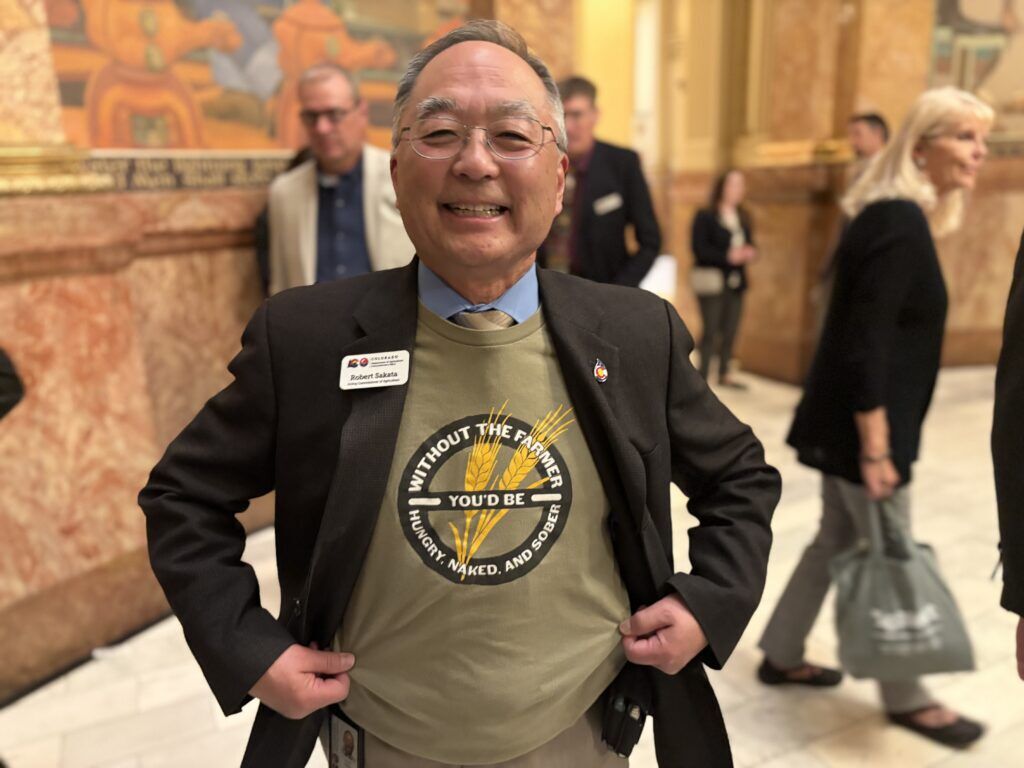
He noted that Colorado has lost 3,000 ag producers and 1.5 million acres of farmland in the last five years alone. Colorado ag is at a tipping point, Sakata told the crowd.
One major concern around ag: water, especially with a record-low snowpack for the 2025-26 winter and a drought that has lasted more than a quarter-century.
To that point, Polis signed one of two ag-related bills during Tuesday’s celebration.
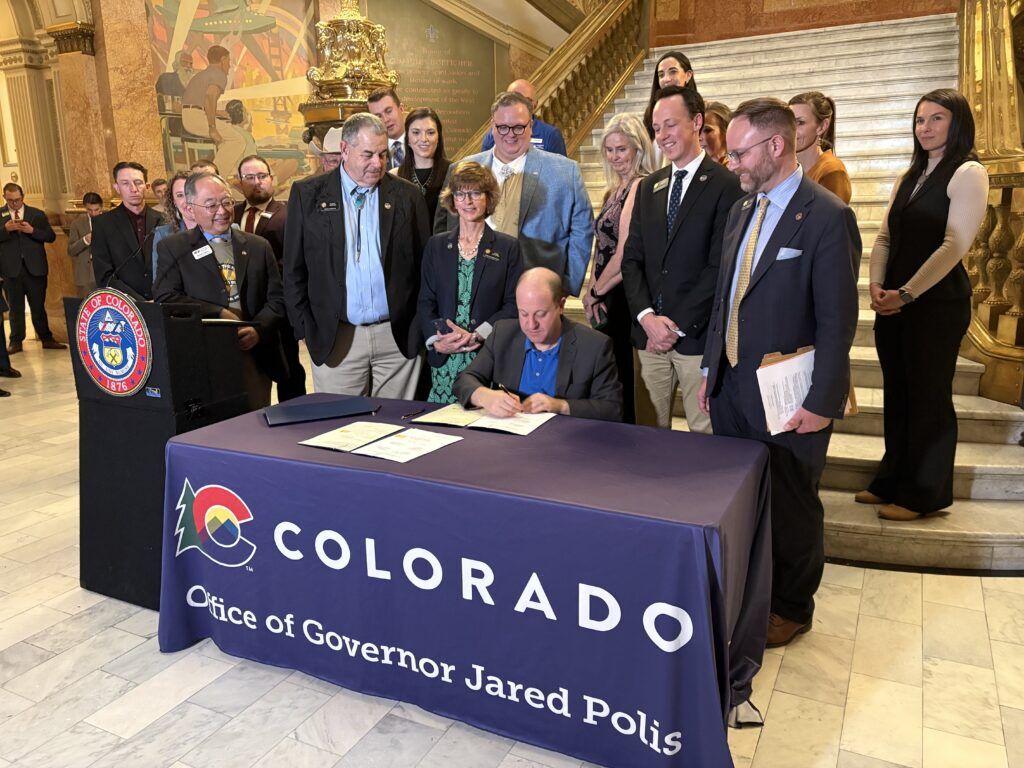
Senate Bill 64 expands the state’s Agricultural Future Loan Program. Currently, the program is open to eligible businesses, farmers, and ranchers for loans of up to $750,000. Eligible expenditures include operating expenses, purchase of land and equipment, business improvements, worker wages and conservation projects, and there is a wait list for loans.
Under SB 64, water conservancy, water conservation, and water and sanitation districts, irrigation districts, and ditch and reservoir companies can apply for the Ag Future Loan Program.
The second bill the governor signed is House Bill 1067, on the state’s diseased livestock indemnity fund. Currently, money goes to ranchers when their herd has been sold for slaughter or destroyed because it was exposed to or diagnosed with an infectious or contagious disease.
Under HB 1067, the Department of Agriculture would be able to use some of those funds to prepare for and respond to certain emerging threats to livestock health.
The two biggest threats to livestock in Colorado are bird flu and the “New World Screwworm,” according to a statement from House Democrats.
Both bills were bipartisan.
Polis also signed a proclamation, naming March 24 as Colorado Agriculture Day.
Tuesday’s event included a display of a 35-foot mural celebrating Colorado ag as part of the state’s 150th birthday celebration.
The mural was created by Thomas “Detour” Evans and was inspired by the story of John Stulp of Lamar, former commissioner of agriculture and the state’s first water czar.
The mural is a left-to-right visual narrative on Colorado agriculture and its history.
It begins with the Ute and Plains indigenous peoples, who grew corn, wheat, beans, squash and other crops. As irrigation expanded, the San Luis Valley began to flourish, along with its acequia irrigation culture, found in Costilla County, where the state’s first water rights are based.
The mural honors Strasburg’s Frank Zybach, who invented center pivot irrigation, a much more sustainable and efficient method of irrigating crops.
The project also includes an oral history provided by Stulp’s family.
“Few names are as synonymous with the modern era of Colorado agriculture as John Stulp,” according to an upcoming coffee-table book by author Rachael Storm of History Colorado, which will celebrate Colorado agriculture in the state’s sesquicentennial year.