Torr Metals Expands 2026 Drill Pipeline with Lodi-Kirby Cu-Au Porphyry Target, Following Strong Vectoring at Bertha
Edmonton, Alberta–(Newsfile Corp. – March 25, 2026) – Torr Metals Inc. (TSXV: TMET) (“Torr” or the “Company“) is pleased to announce that the drill-permitted Lodi and Kirby Zones have emerged as a compelling secondary drill target for the 2026 exploration program, based on newly integrated interpretations of geological, geochemical, and geophysical datasets.
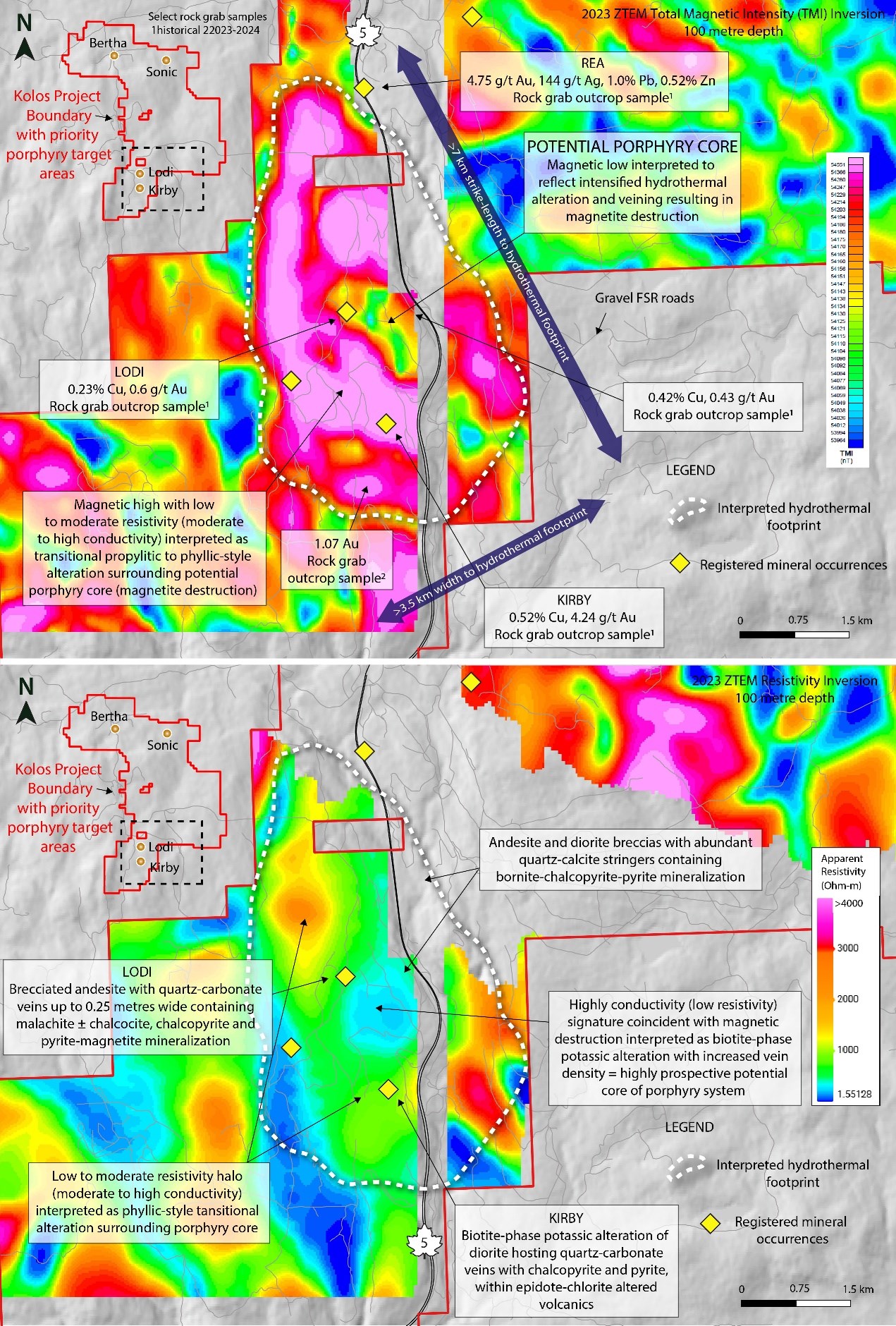
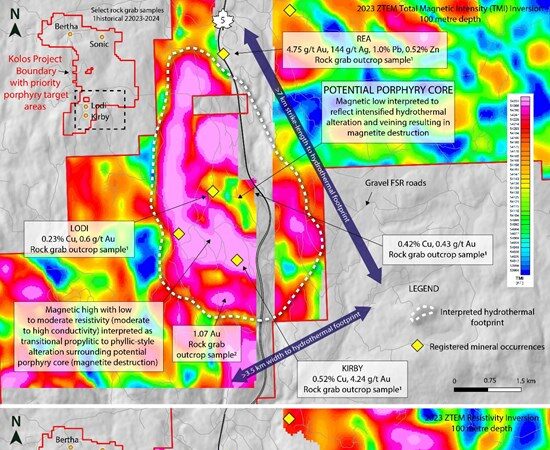
Torr believes the Lodi-Kirby area represents a highly prospective copper (Cu) – gold (Au) porphyry cluster system, with the potential to host multiple preserved mineralized intrusive centres, including the Lodi and Kirby occurrences, at shallow to moderate depths beneath a broader interpreted hydrothermal footprint measuring approximately 24.5 km² (Figure 1).
The Lodi-Kirby Zones provides a strong complement to the Company’s primary focus at the Bertha Zone, where Phase 1 drilling completed in late 2025 delivered strong vectoring toward high-priority target areas where potential source porphyry intrusions are interpreted to be located (see January 22, 2026 news release). Lodi-Kirby is situated within the Company’s 100%-owned highway-accessible Kolos Cu-Au Project in southern British Columbia.
A follow-up update on the Bertha targeting progress is expected in the near term.
Highlights:
The Company’s current interpretation indicates that Lodi-Kirby exhibits several characteristics commonly associated with concealed porphyry Cu-Au systems, including:
-
Large magnetic anomaly with a central zone of magnetic destruction (Figure 1) with rock grabs assays around the margins returning up to 0.52% Cu and 4.24 g/t Au.
-
A coincident conductive core indicative of sulfide-bearing hydrothermal alteration as evidenced by Cu–Au mineralization hosted in exposed biotite-phase (potassic alteration) diorite intrusions at Kirby, located on the margins of the interpreted core.
-
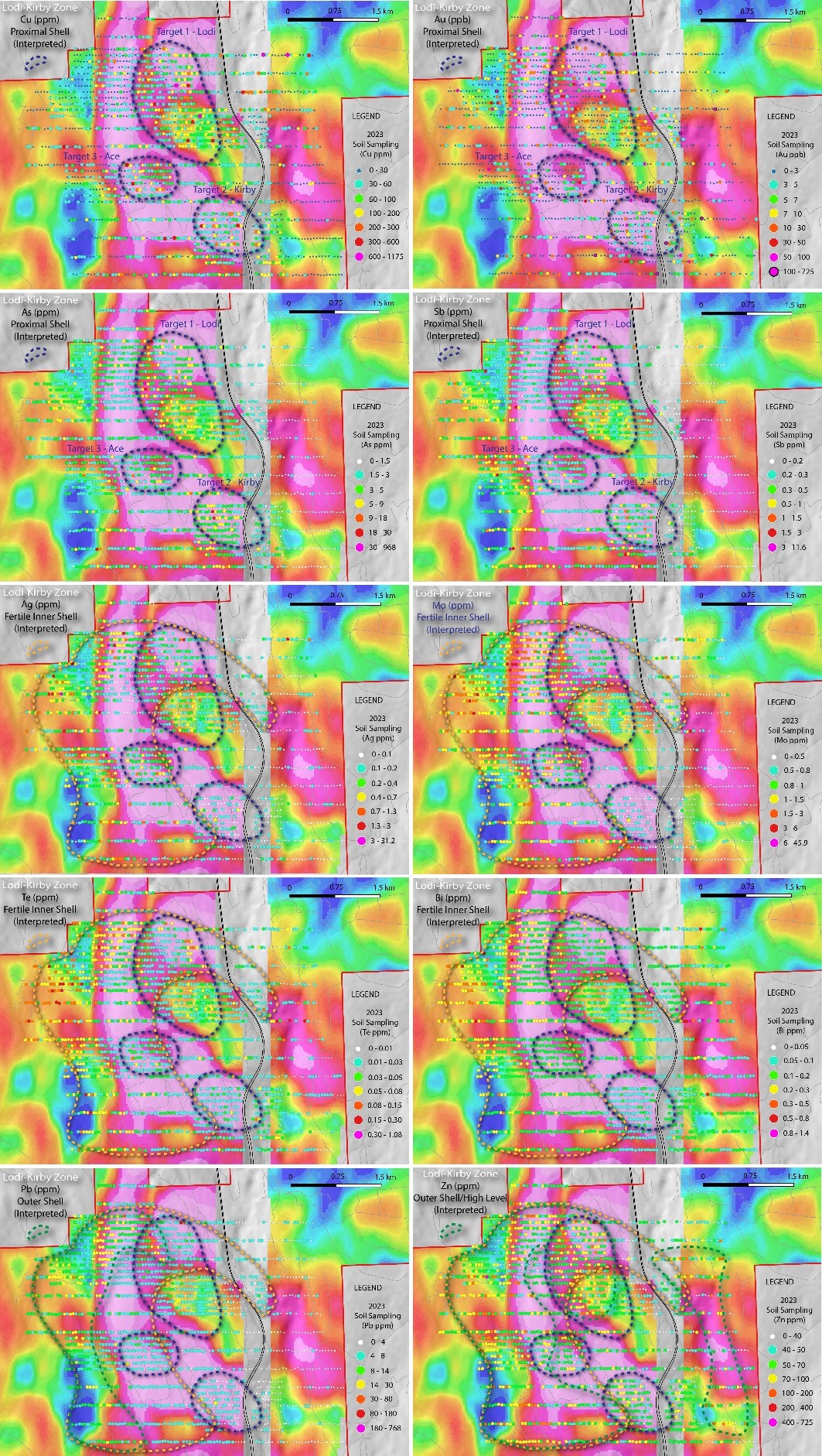
Surrounding polymetallic geochemical footprint silver (Ag) – molybdenum (Mo) – tellurium (Te) – bismuth (Bi), together with lead (Pb) – zinc (Zn), consistent with the interpreted inner and outer alteration shells respectively (Figure 2).
-
Mineralized brecciated volcanic sequence at Lodi suggests proximity to a causative porphyry system, vectoring towards a mineralized core at depth.
-
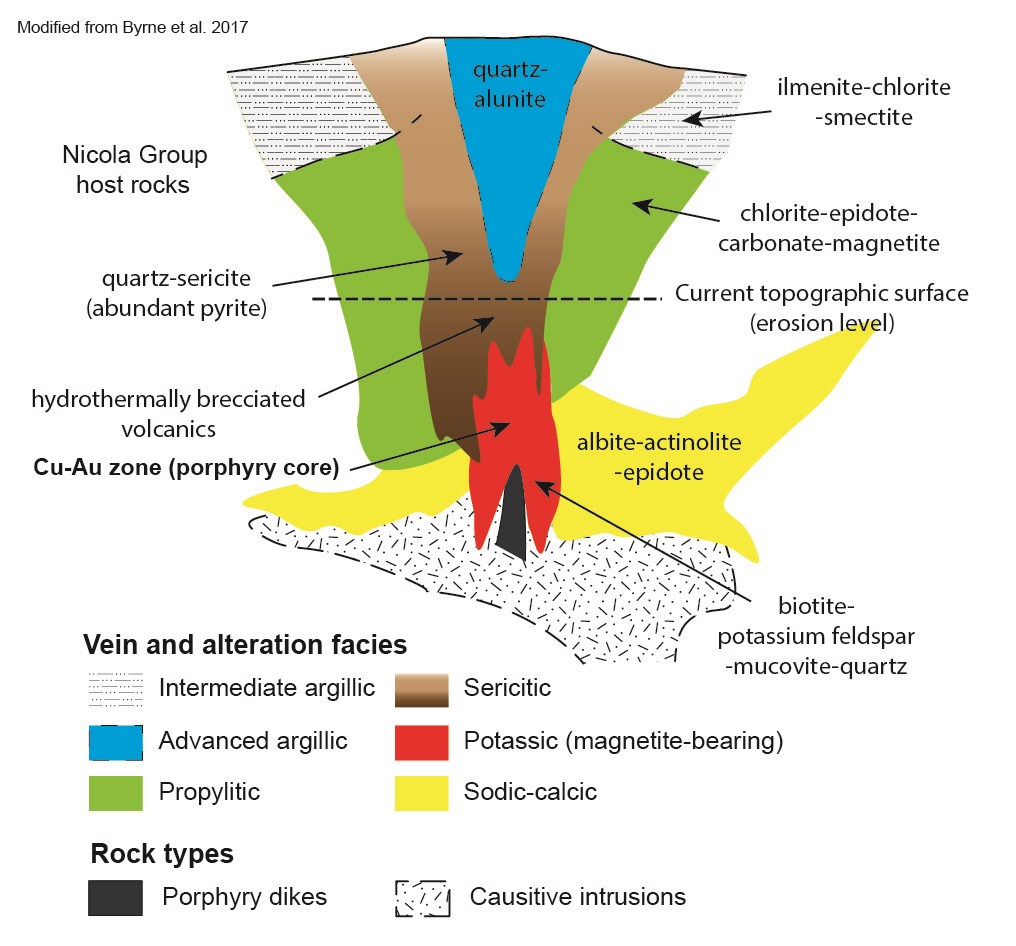
Alteration zonation from propylitic to phyllic with increasing quartz–carbonate veining toward the interpreted high conductivity core (Figure 1, Figure 3).
“Lodi-Kirby has rapidly advanced as a compelling drill target and adds meaningful momentum to our 2026 exploration program,” stated Malcolm Dorsey, CEO of Torr Metals. “With strong vectoring already established at Bertha, the addition of Lodi-Kirby strengthens our pipeline of high-quality targets and potentially increases our chances of success in Phase 2 drilling. Importantly, Torr is fully funded for up to 6,000 metres of drilling within the drill-permitted Bertha and Lodi-Kirby zones, positioning us to efficiently advance both targets this season. Together, these targets highlight the growing scale and discovery potential of the Kolos Project and positions the Company for an active and results-driven exploration season.”