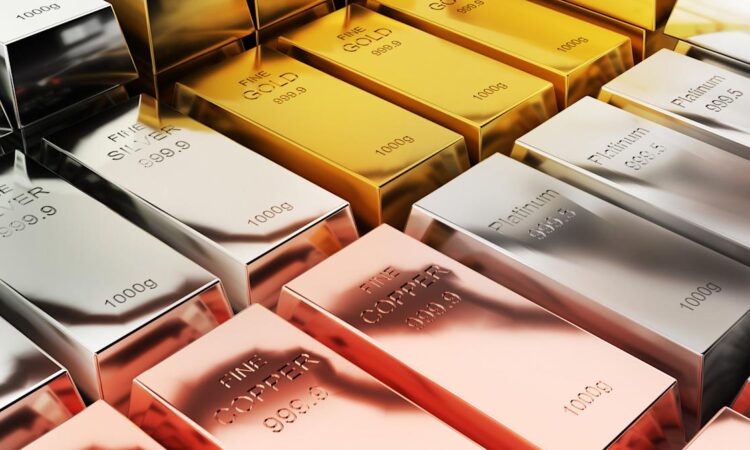

3D render of bars of the precious metals gold, silver, platinum, and palladium – Oselote/Getty Images
Metals are more than just tough and durable building materials; several are vital in the production of commodities. Many of these are precious metals which are prized for their catalytic capabilities but are expensive to extract and produce. Researchers have been searching for an inexpensive replacement, and one team invented a new form of aluminum that could do all that and also serve as the catalyst for future chemistry breakthroughs.
Recently, King’s College in London announced that a team of scientists led by Dr. Clare Bakewell has developed a new form of aluminum that is so reactive it can serve the same purposes as precious metal catalysts. More importantly, the recently discovered aluminum variant could potentially lead to even more discoveries down the line. As Bakewell’s team experimented with the material, they discovered “new and interesting reactions” every so often. For instance, one variant of the aluminum consists of atoms arranged in a triangular structure that remain intact even when dissolved. As Dr. Bakewell stated, such a reaction is “unprecedented.”
While an aluminum derivative that can mimic the manufacturing utility of a precious metals is impressive, the new material goes one step further and might hold the key to brand new compounds. Dr. Bakewell believes this aluminum’s unique structure and reactivity could produce materials with even more novel (and larger) molecular structures, as well as properties that could produce yet more compounds in a veritable chain reaction of discoveries. One day, Bakewell’s aluminum could very well help produce an aluminum alloy that, say, produces limitless energy. We haven’t even scratched the surface of this aluminum’s potential.
Read more: What’s Happening To Earth Right Now Can’t Be Explained By Climate Models
What’s the big deal with this aluminum?

Scientist examining chemical reactions with a microscope – PanuShot/Shutterstock
The work of Bakewell and her team is groundbreaking in and of itself. In Bakewell’s own words, the new form of aluminum is “pushing the boundaries of chemical knowledge,” however, the true importance of this discovery stems from just how easy it is to obtain aluminum compared to the materials Bakewell was trying to replace.
Precious metals are the backbone of countless industries. Without palladium, we wouldn’t have hydrogen peroxide, and platinum is essential in the production of silicon. However, excavation is expensive and often damages the environment. To make matters worse, precious metals are frequently sourced from regions of political instability. The mercurial nature of the governments in these regions tends do drive up demand and prices even further. Comparatively, aluminum is inexpensive to produce, and extraction doesn’t damage the environment as much. Plus, you can mine for aluminum just about anywhere.
If Bakewell’s aluminum can truly serve as the catalyst she claims it does, it can take material scarcity out of the equation of many industries, thus lowering manufacturing costs and prices of the finished products. This could also apply to industries that don’t actually use the aluminum — using this new material as a catalyst instead of gold could make more gold available to place in smartphones, thus driving down prices. Of course, this all just theoretical, so only time will tell.
Enjoyed this article? Sign up to BGR’s free newsletter and add us as a preferred search source for the latest in tech and entertainment, plus tips and advice you’ll actually use.
Read the original article on BGR.