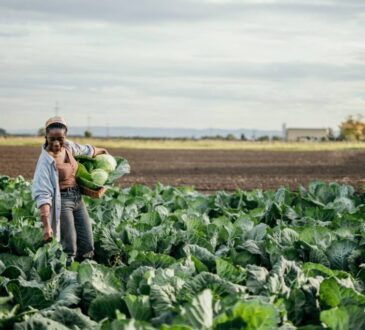
Government has positioned agriculture as a central component of economic planning, placing the sector at the forefront of efforts aimed at strengthening growth, improving food security and supporting national development.
The focus reflects the role agriculture plays in sustaining livelihoods across the country. A significant portion of the population is engaged in farming, making the sector a key contributor to income generation and economic participation, particularly in rural areas.
The approach being taken highlights agriculture as more than a support activity. It is being framed as a core driver capable of influencing broader economic outcomes through production, distribution and value chain activity.
Efforts within the sector are directed toward improving productivity and consistency in output. Increasing efficiency in farming operations is seen as central to strengthening supply and reducing vulnerability to changing conditions.
Access to inputs remains an important factor in production. Availability of seed and fertiliser directly affects yields, making it a central element in supporting farmers and sustaining output levels.
Irrigation development also forms part of the approach. Expanding irrigation capacity reduces dependence on rainfall and supports continuous production, contributing to stability within the sector.
Infrastructure plays a role in supporting agricultural activity. Storage, transport and processing systems influence how produce moves from farm to market, affecting both availability and value retention.
The focus on agriculture is linked to broader economic objectives. Strengthening the sector contributes to diversification, reducing reliance on a limited number of industries and expanding the base of economic activity.
Food security remains a key consideration within this framework. Stable production supports consistent supply, helping to maintain availability of essential commodities across the country.
Participation within the sector continues to evolve. Farmers operate at different scales, ranging from smallholder activity to larger commercial operations. Each contributes to overall production and plays a role in shaping outcomes.
The approach recognises the importance of supporting both levels. Smallholder farmers form a large part of the sector, while larger operations contribute to scale and efficiency.
The direction being taken reflects an emphasis on strengthening existing capacity while improving systems that support production. This includes enhancing processes that influence how resources are accessed and utilised.
The role of agriculture within economic planning continues to draw attention as the country prepares for the next phase of development. The sector’s contribution remains tied to productivity, stability and its ability to support broader economic activity.
The focus remains on how effectively the sector can sustain output and contribute to national priorities. Agriculture continues to hold a central position within this framework.
Loading read count…