
The Democratic Progressive Party (DPP) administration, elected on September16 2025, entered office with a manifesto that promised to transform Malawi’s fortunes in energy, mining and industrialisation.
One hundred days on, the record is mixed.

access by 2030. | Nation
Fuel supplies have begun to stabilise and repairs at key power stations have been completed, yet progress on re‑establishing Power Market Limited (PML) and capitalising the Malawi Mining Investment Company (Mamico) remains elusive.
The administration inherited a sector beset by fuel shortages and rolling blackouts, undermining industrial output and mining ventures.
While large‑scale investment is inevitably long‑term, swift maintenance and policy alignment are essential to sustain operations and attract capital.
Few expected sweeping achievements in the first 100 days, but decisions taken now will shape the trajectory of reform.
Although meaningful investment in the sectors is capital-intensive and long-term, maintenance and quick repairs ensure sustainability while timely policy alignments and structural adjustments create conducive environment for investors to bet their money.
While it is unrealistic that in 100 days the new government can achieve a lot of its promises in the manifesto, especially in energy, mining and industrialisation, policy issues, structural adjustments and decision-making are critical.
Manifesto promises
In energy, the DPP administration pledged to connect one million new customers to the national grid, raise generation capacity to 1 500 megawatts (MW) and revive PML to streamline bureaucracy at Electricity Supply Corporation of Malawi (Escom).
In mining, it promised to inject K500 billion into Mamico, formalise artisanal and small‑scale mining and promote value addition to minerals for export and import substitution.
This was to ensure value-addition in mining as well as linking it to high-end local production, key to high-value exports and imports substitution.
On industry, six sectors were prioritised: agro‑processing, textiles and apparel, mineral processing, pharmaceuticals, renewable energy and technology, each to be developed through Special Economic Zones offering modern infrastructure and reliable power.
Energy sector
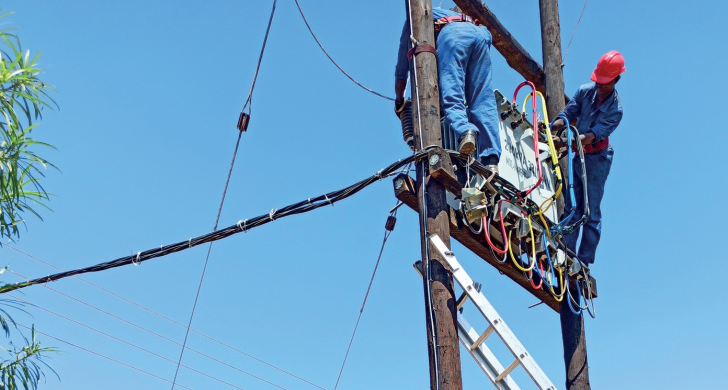
In its end of year brief coinciding with the first 100 days of the DPP administration, the Department of Energy cited repair works at Tedzani III and Kapichira II in December 2025 as early successes.
Reads the analysis in part: “At the same time, efforts to rehabilitate and modernise standby diesel power plants are ongoing although progress is partly constrained by foreign exchange availability. These interventions are aimed at stabilising supply in the short-term while long-term solutions are implemented.”
In addition, the department said the Kanengo Battery Energy Storage System is being introduced to improve grid stability and reliability and that coupled with the Mozambique–Malawi Power Interconnector Project, electricity will stabilise by February this year.
Fuel supplies, disrupted for months, have improved since mid‑November 2025. Government is returning from Government-to-Government (G2G) procurement to an open tender system, with the National Oil Company of Malawi already engaging suppliers.
Yet PML, intended to purchase electricity from independent producers and sell to Escom, has not been re‑established. Ministry officials confirm discussions are ongoing.
The department said consultations are ongoing with the Ministry of Justice to amend the Liquid Fuels and Gas Act of 2025 to facilitate the transition from G2G fuel procurement arrangement to Open Tender System.
“In parallel, National Oil Company of Malawi is in the process of procuring suppliers under the open tender system,” reads the analysis.
Ministry of Energy and Mining director of electricity Million Mafuta confirmed the status of PML, but said discussions have started to that effect.
“It has not yet been re-established, but I can confirm that discussions have started and we will give a concrete update in the coming weeks,” he said.
Mining
The DPP administration, among others, indicated that Mamico was earmarked for K500 billion capitalisation to manage State equity in mining ventures and maximise national revenue.
The administration promised to facilitate value-addition in some of the minerals to fetch higher prices on the global market.
In this regard, experts say President Peter Mutharika’s Executive Order banning unprocessed gemstone exports was welcomed as a bold step to curb smuggling and enhance value addition.
In the Mid‑Year Budget Review, Mamico received K3.6 billion through its parent company, MDC Holdings Limited.
Mamico chief executive officer Leonard Kalindekafe said talks with the Ministry of Finance on capitalisation are continuing, arguing that with adequate funding Mamico could transform the sector’s contribution to gross domestic product (GDP).
Chamber of Mines and Energy national coordinator Grain Malunga, who acknowledged progress the two sectors have registered over the past 100 days, stressed that Mamico and PML are pivotal.
“Mamico needs capital to partner with investors. If well resourced, it could hold majority stakes. As for PML, Escom cannot manage the power market alone. The sooner it returns, the better,” he said.
Industrialisation
The six priority industries that government has earmarked in agro-processing, textile and apparel, mineral processing, pharmaceuticals, renewable energy and technology, remain largely aspirational and require incentives, reliable energy and a favourable business climate.
The government has also intensified policy interventions, which include a new diaspora desk at the Malawi Investment and Trade Centre, to encourage investment from abroad.
Yet energy constraints continue to weigh on industrial output, with fuel scarcity and forex shortages hampering progress.
Conclusion
The DPP’s first 100 days have been marked by modest gains in stabilising fuel and electricity supply, alongside delays in structural reforms.
While challenges remain, the administration’s early steps suggest a willingness to confront long‑standing problems and lay the groundwork for future growth.


