
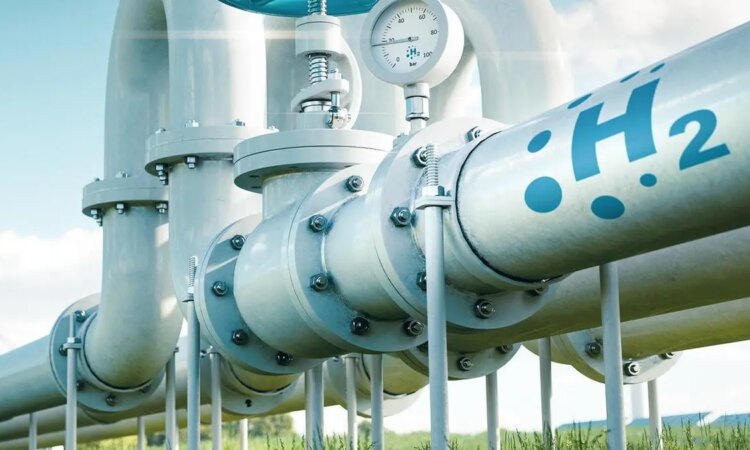

The MoU is intended to support evidence-based regulation and standardisation, initially for hydrogen blending and progressively for 100% hydrogen applications
| Photo Credit:
istock.com
The Petroleum and Natural Gas Regulatory Board (PNGRB) said on Monday that it has signed a Memorandum of Understanding (MoU) with the German Technical and Scientific Association for Gas and Water (DVGW) to establish a framework for cooperation on hydrogen integration in natural gas infrastructure.
The MoU was signed by Ajit Vinayak Gupte, Ambassador of India to Germany and Philipp Ackermann, German Ambassador to India, in the presence of Prime Minister Narendra Modi, and German Chancellor Friedrich Merz in Gandhinagar, Gujarat.
DVGW is Germany’s technical and scientific association for the gas and water sector that formulates technical rules and test principles for gas and hydrogen infrastructure and supports their application through standardisation and testing.
PNGRB has initiated work to facilitate future readiness of India’s natural gas infrastructure, with a focus on hydrogen blending with natural gas and progressive retrofitment or repurposing of gas systems, the oil and gas sector regulator said.
The National Green Hydrogen Mission (NGHM) recognises PNGRB’s role in facilitating a regulatory framework for hydrogen use in Refineries and City Gas Distribution (CGD) networks.
The regulator has also conveyed suggestions for amendments to the PNGRB Act, 2006, to explicitly include hydrogen transportation through pipelines and hydrogen–natural gas blends, to enable regulatory clarity as hydrogen pipeline deployment emerges.
The MoU is intended to support evidence-based regulation and standardisation, initially for hydrogen blending and progressively for 100 per cent hydrogen applications, subject to statutory mandate. It is a non-binding framework, with specific activities to be pursued through separately agreed work plans/ arrangements.
Key deliverables under the MoU include access to relevant DVGW technical rules/ test principles (with translation support where required) and standards adoption/adaptation for Indian operating conditions and a Hydrogen Readiness Testing Scheme (HRTS) (materials, component/loop tests, field pilots).
The MoU also envisages hydrogen-ready certification and a supporting database of suitable components/ processes, network simulation tools for blends, exchange of practices on odorisation, leak detection and safety methodologies, along with technical exchanges/visits as appropriate and technical visits or knowledge exchange, PNGRB added.
Published on January 12, 2026


