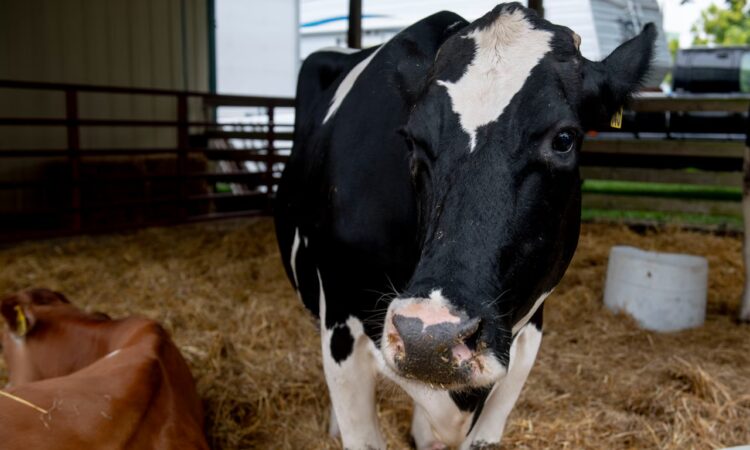
LANSING, MI – Chelsie Boles, a Lapeer County farmer who raises poultry, pork and dairy cows, said small farmers are frustrated with the “red tape and financial burden necessary to sell farm products.”
“Small agriculture is suffering from overregulation on food, disguised as a means of public safety,” she said during a Michigan House committee hearing held on Thursday, Jan. 15.
Boles and several other Michigan farmers who spoke on Thursday believe there is one way to begin easing that burden – a new law that would amend the state’s ban on raw milk sales, allowing farmers to sell directly to consumers.
“We have no ability to compete within the parameters that were meant for big ag[riculture],” Boles said. “Passing this bill would allow small farms a method by which to make food available outside of the traditional channels we can’t afford to participate in.”
When it comes to the well-studied risk of raw milk, the same farmers said there are safety measures they can take to reduce it. They said consumers will understand and accept the risk.
But for the agriculture groups who opposed the bill, the change signals a significant public health concern.
The process of pasteurizing, or heating milk to a particular temperature to remove microorganisms, was first used in the 1860s by microbiologist Louis Pasteur. By the early 1920s, it was routinely used in the U.S.
Prior to World War II, it was estimated that milk-related outbreaks accounted for around 25% of all food and water-related disease outbreaks, while today that number is less than 1%.
The sale of unpasteurized milk has been opposed by regulatory and health organizations like the U.S. Food and Drug Administration (FDA), the American Medical Association and the American Academy of Pediatrics. In 1987, the FDA prohibited the interstate sale of raw milk, though the federal government agency does not regulate its sale on a state-by-state basis.
“We urge consumers who purchase raw milk to understand the health risks involved,” an FDA website reads. “While raw milk puts all consumers at risk, the elderly, immune-compromised people, children and pregnant women are especially vulnerable to the hazards of raw milk consumption.”
But in recent years, a small number of raw milk advocates has appeared to grow. In recent months, the trend has been bolstered by U.S. Secretary of Health and Human Services Robert F. Kennedy, Jr., who said he drinks raw milk and has criticized the FDA’s “aggressive suppression” of raw milk production.
Advocates say the pasteurization process depletes milk of beneficial nutrients, and that raw milk can have health benefits, like reducing asthma and allergies. These claims have been disputed by public health officials.
According to the Centers for Disease Control and Prevention (CDC), from 1998 to 2018, there were 202 outbreaks linked to drinking raw milk, causing 2,645 illnesses and 228 hospitalizations.
In response, Ashley Armstrong, a southwest Michigan farmer, said she believes the change is about respecting consumer freedom of choice.
“Adults are currently allowed to make informed decisions involving known risks every single day,” Armstrong said. “Alcohol, vape pens, sushi with raw fish, raw oysters, and even raw cookie dough. In those cases, the government doesn’t ban access. Instead, it provides information and allows adults to decide for themselves.”
Morgen Baer, a Kalamazoo mother of two, wrote to the committee that she doesn’t trust most of what’s available at the grocery store today, and between “heavy processing requirements and long ingredient lists, it feels like food has become more about regulation and shelf life than nourishment.
“I trust farmers, especially farmers I know, far more than I trust a heavily regulated system that requires food to be altered and processed before it ever reaches my family,’ she said in support of the bill. “I want the freedom to buy a wide variety of farm-fresh foods directly from those farmers, not just raw milk, but raw dairy products, bread, meat, eggs and other minimally processed foods that align with how humans have eaten for generations.”
Currently, around 20 states allow the sale of raw milk to consumers, and around a dozen more allow retail sales.
While Michigan doesn’t allow direct sales, the state does have one loophole – called herdsharing – that allows customers to buy a portion of a farmer’s dairy herd and receive raw milk in exchange.
Groups like the Michigan Farm Bureau said they believe the state’s existing model allows individuals to make choices through these arrangements while “maintaining a clear prohibition on commercial sales,” a balance the group said “appropriately limits public health exposure while preserving regulatory clarity.”
But the bill, introduced last year by Rep. Matt Maddock, R-Milford, would allow farmers to sell raw milk and milk products directly to consumers.
The bill has not yet been voted out of committee, and a second hearing date has not been set.
The products would not be able to be sold at retail establishments, like grocery stores or restaurants, and would have to be packaged in food-grade containers with dated warning labels.
They could also be sold at farmers’ markets and farm stands, but would have to be frozen.
The sale would be accompanied by some temperature requirements, like cooling the milk to 45° Fahrenheit or below within two hours after milking, and bacterial limits.
The herd animals must also be tested for some ailments, like tuberculosis, at least once every 12 months, and milk would be tested quarterly for common foodborne pathogens.
Accompanying legislation would exempt farm-to-customer producers from licensing and evaluation provisions, other than a requirement that they register with the state Department of Agriculture and Rural Development (MDARD) at least 90 days before they begin selling raw milk products.
MDARD said the change would likely increase work for its milk and food safety programs, factoring in the likelihood of more complaints, investigations and enforcement actions associated with foodborne illness and food contamination.
Groups like the Dairy Farmers of America also opposed the bill, arguing that direct to consumer sales would harm its nearly 9,500 farmer-owners across the U.S., including 184 farmers in Michigan.
“Dairy farmers harvest one of nature’s most wholesome and nutritious products each and every day,” the group’s opposition letter read. “Raw milk, however, is also the perfect host for many harmful and dangerous pathogens.”
“When consumers become ill due to consuming raw milk, regardless of the dairy’s size or nature of incident, the entire industry is negatively impacted,” they said. “These cases not only hurt dairy farmers, dairy processors and manufacturers, but they also undermine the public’s trust in the dairy products they consume daily.”
According to the Michigan Dairy Foods Association, 11.74 billion pounds of milk were produced in the state in 2022, at a value of $2.88 billion. That ranks Michigan sixth in the nation, with its dairy farms contributing an estimated $15.7 billion to the economy.
But farmers who testified in favor of the bill said they believe small farms have more incentive to maintain sanitary conditions. Armstrong said if farmers “don’t produce safe milk, customers will not come back.”
And Fowlerville farmer Rick Hitchcock said things like proper herd hygiene, the speed at which fresh milk is cooled and regular milk testing are all things that can take raw milk from a risk to a “highly-controlled, carefully-managed food.”