
New England ratepayers may save up to $700 billion by swapping renewables for gas: study says
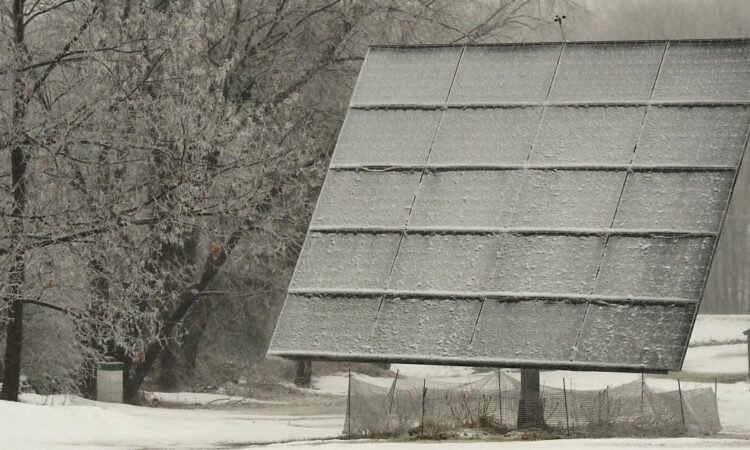
New England states pay the highest electricity costs in the continental U.S. Except for New Hampshire, New England states also have some of the most aggressive net-zero emissions policies in the country, which aim to reduce emissions from electricity generation by 80% by 2050. To reach that goal, about 71% of New England’s energy will have to be generated from wind, solar and batteries.
A new study by a coalition of free-market think tanks finds that New Englanders would save as much as $708 billion if it instead supported its grid with new natural gas plants, which would reduce greenhouse gas emissions by 24.5%.
If New England utilized nuclear power plants, ratepayers would save nearly $400 billion by 2050, and emissions would be reduced by 92%. A mix of natural gas and nuclear, the study found, would save ratepayers $619 billion in that time and reduce emissions by 50%.
Extraordinarily long, dangerous blackouts
The study builds upon a 2024 study that found the total cost of New England’s current zero-emissions plan will cost $815 billion through 2050. It forecasts a 106% increase in electricity demand as a result of the electrification of appliances, home heating and transportation.
The plan would require 97 gigawatts of energy created by renewables. The most economical mix of intermittent sources, according to the study, would be 6,600 offshore wind turbines, over 5,600 onshore wind farms, and over 129 million solar panels covering 200 square miles of New England.
Not only are the costs staggering, but the study estimates that the New England grid would face “extraordinarily long blackouts” lasting as long as 18 hours. Such a blackout could leave hospitals, highways and airports in the dark, and literally freeze citizens to death.
The new study takes the conclusions of the 2024 study and analyzes costs to reach the New England projected electricity demand by 2050 using nuclear, natural gas or a mix of both, instead of renewables. In all three cases, New England ratepayers see enormous savings, according to the new study.
“The big reason for that is the dispatchable resources don’t require the same overbuilding and curtailment that you would need for renewables,” Isaac Orr, vice president of research at Always On Energy Research, said in a Tuesday webinar introducing the study.
Because wind and solar only generate electricity under the narrow weather conditions, the amount of total installed capacity has to be much greater than peak electricity demand.
That also means when weather conditions are ideal, the grid is producing far more power than it can use and store. As a result, wind and solar farms are often curtailed when there’s no place for all the electricity to go. In California, for example, curtailment is increasing steadily every year.
Voters seek lower energy costs
As with other affordability issues, the cost of energy is a prime concern for voters right now, and New England is no exception. As winter approached, Massachusetts Gov. Maura Healey directed the Department of Public Utilities to do a comprehensive review of gas and electric rates to figure out how to lower the state’s sky-high energy costs. The DPU hasn’t finished the review, but by November, Healey was blaming President Donald Trump for high heating costs in her state.
On Thursday, Healey delayed the Clean Heat Standard, which requires heating in homes, businesses and industry to reduce its greenhouse gas emissions, which the governor had championed as lowering costs for consumers. Its mandates now will not go into effect until after the state’s gubernatorial election.
“As we head into 2026, any New England politician who wants to actually make substantial progress on affordability really needs to read this report,” Drew Cline, president of the Josiah Bartlett Center for Public Policy, a free market think tank in New Hampshire, said in the webinar.
New Hampshire is the only New England state that hasn’t set legally binding net-zero emissions targets.
“New Hampshire was really a political pariah in New England for pursuing a reality-based energy policy focused on reliability and affordability, rather than a fantasy-based energy policy focused on lowering global greenhouse gas emissions,” Cline said.
Citizens paying the price of virtue
However, Cline explained, as energy costs weigh on the minds of voters, New England politicians have begun to reconsider the net-zero emissions policies they once viewed as virtuous. As Healey was directing the DPU to do its comprehensive review, she began to claim she never opposed natural gas pipelines.
However, a video surfaced from 2022 showing Healey bragging about having stopped two pipelines from coming into the state.
Orr with Always On Energy noted that the natural gas scenario in the study would depend on new pipeline capacity. That “may or may not be feasible based on local sentiments about that expansion process, but ultimately that would be the lowest cost way to meet this new peak demand,” Orr said.
Many politicians continue to claim that wind and solar will drive down energy costs, especially when criticizing the energy policies of the Trump administration. Legacy media outlets also continually repeat the claim.
Misleading comparisions dominate media coverage of renewables
Politico performed an analysis in October that compared the amount of electricity generated by renewables in states with their energy rates, to dispute President Donald Trump’s claims that they drive up energy costs. It’s unclear why the reporters would compare the sources of electricity generation to rates paid, since that’s not a comparison of where ratepayers get their energy from to what they pay for it.
For example, at the top of their list of high-renewable states is Iowa. In 2024, 52% of Iowa’s electricity generation came from wind and solar. Its residents paid $0.11 per kilowatt-hour in June 2025. Based on this, the reporters concluded that there’s a relationship between the two.
That’s not correct. States don’t exist as electricity islands. Iowans got approximately 70% of their energy from fossil fuels in 2023, according to the Energy Information Administration. Only about 10% of the energy they consumed was from wind and solar.
Scientific American last summer also claimed wind and solar are the cheapest form of energy, basing its claim on Lazard’s “Levelized Cost of Energy” report, which excludes many costs associated with placing intermittent resources on the grid. These ignored costs include increased transmission line costs, battery storage, curtailment and overbuilding costs.
Orr told Just the News that the levelized cost of energy analysis that Always On used in the New England report examines the costs of meeting that specific system in the future.
“The cost of wind and solar in our report is very high because they’re being asked to […] meet peak demand during the winter peaks, which they are not very good at. So that’s why you have such a high amount of cost and storage associated with that,” Orr said.
In the nuclear and natural gas scenarios, he explained, you can build capacity to meet the demand with a reserve margin without massive overbuilding.
Kevin Killough is the energy reporter for Just The News. You can follow him on X for more coverage.


