
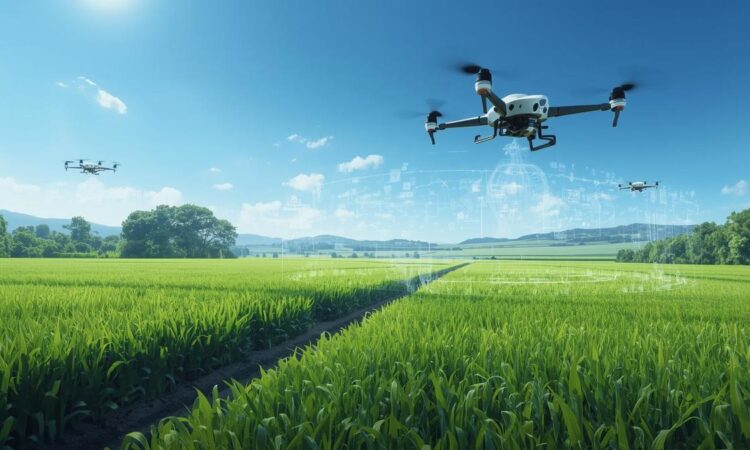
Terming the budget proposals for Bharat-VISTAAR (Virtually Integrated System to Access Agricultural Resources), stakeholders from the sector said it will be a transformative AI reform in Indian agriculture.
Amit Singh, Partner at Deloitte, said Bharat VISTAAR brings AI to the heart of agriculture by integrating ICAR knowledge and agri‑startup insights to offer farmers verified, contextual, and timely advisories. Real impact will come from scaling to millions and steadily building the ecosystem to boost productivity and farmer incomes.
The launch of Bharat VISTAAR in the Union Budget 2026-27 marks a much‑awaited and transformative AI reform for Indian agriculture. By combining AI with trusted knowledge sources such as ICAR, along with insights from agri‑startups and ecosystem partners, it delivers verified, contextual, and timely advisories to farmers. The true success of Bharat VISTAAR will depend on scaling to the population level, driving last‑mile adoption, and patiently building a robust data and delivery network. With sustained implementation, it can significantly enhance productivity, reduce risks, and improve farmer incomes over the long term.
Enhancing crop planning
Maulik Doshi, Managing Director, Direct Tax, Nexdigm, said that by integrating AI-driven advisory services, the Bharat VISTAAR initiative can enhance crop planning, optimise resource usage, and empower farmers with real-time, data-based decision-making. Bharat Vishkar has the potential to catalyse a shift from traditional practices to a more resilient, technology-enabled agricultural ecosystem.
Padmanand V, Partner and Agriculture Industry Leader, Grant Thornton Bharat, said that AI-integrated agri-tech solutions will support agriculture related initiatives by providing customised crop advisory. The measures are also prioritised by specific commodity value chains, with emphasis on enhancing productivity, branding, and competitive aggregation through FPOs.
Amit Vatsyayan, Partner and Leader, Social & Skills Sector, EY India, said the Mahavistar initiative stands out as a systemic intervention to bridge last-mile knowledge gaps by transferring validated research to farmers, leveraging Digital Public Infrastructure such as AgriStack and AI-enabled advisories to enhance productivity, quality, and competitiveness.
Expanding access
Gaurav Manchanda, Founder & Director, The Organic World – Agriculture, said the introduction of Bharat Vistar, a multilingual, AI-driven platform integrated with AgriStack, is a positive step towards expanding access to agricultural knowledge and equipping farmers with advanced tools to make better-informed decisions. “I view these measures as important building blocks for a more inclusive and future-ready agricultural ecosystem. Collectively, they can support stronger rural livelihoods and enable wider access to clean, sustainable, and nutritious food for consumers across the country.”
Rajesh Shirole, Co-Founder and COO at MapMyCrop, said the launch of Bharat Vistar in the Union Budget is a landmark move towards technology-driven agriculture. By integrating AgriStack portals and ICAR’s package of practices with advanced multilingual AI systems, this platform will empower farmers with data-driven insights to make smarter decisions and enhance productivity. “At MapMyCrop, we believe this initiative will accelerate the adoption of precision farming, reduce risks, and ensure that farmers across diverse regions and languages can benefit from customised advisory support. It is a strong step towards building a resilient and inclusive agricultural ecosystem,” Shirole said.
Sparsh Sachar, Director and Business Head, FMCG, Nutrica Foods, said the integration of AI through initiatives like Bharat-VISTAAR also has the potential to improve crop planning, yield predictability and risk management for oilseed farmers. Over time, these measures can support a more stable domestic oil ecosystem, benefiting farmers, agri-businesses and consumers by reducing volatility and import vulnerability.
Translating complex data
Jinesh Shah, Managing Partner, Omnivore, said the agriculture announcements in Budget 2026 point to a structural shift in how India approaches food security and farm incomes. Platforms like the AI-driven Bharat-VISTAAR recognise that stable food systems are built through better decision-making, climate resilience, and real-time intelligence.
Tarun Sawhney, Vice Chairman and Managing Director, Triveni Engineering & Industries Ltd, said the Union Budget 2026-27 reinforces the Government’s long-term vision of building a technology-enabled, sustainable, and resilient agricultural economy. The launch of Bharat VISTAAR is a transformative step that brings together AI, AgriStack, and ICAR’s extensive knowledge systems to deliver timely, multilingual, and localised advisories to farmers.
Sunanda R Marak, Senior Geopolitical analyst, Future Shift Labs, said India’s approach to integrating AI into agriculture is moving beyond pilots to system-level thinking. The proposal to launch Bharat Vistaar signals a shift towards virtually integrating fragmented agricultural resources into one intelligent, multilingual interface. By integrating AgriStack portals and ICAR’s scientific packages through AI, the initiative can translate complex data into actionable, localised advisories for farmers.
Modernisation via tech
Amit Patjoshi, CEO, Palladium India, said the initiatives such as credit-linked support for livestock FPOs and the ‘Bharat Vistar’ AI-enabled agri stack demonstrate a push towards modernising agriculture through technology, enabling farmers to make informed decisions and connect more effectively with markets. For lasting impact, it will be crucial to ensure that these interventions translate into improved livelihoods for small and marginal farmers across India.
Ankur Aggarwal, Chairman, CropLife India and Executive Chairman and Managing Director, Crystal Crop Protection Ltd, said Bharat Vistaar has the potential to significantly improve how scientific knowledge reaches farmers by strengthening last-mile extension. Integrating Agri Stack’s digital farmer records with ICAR’s validated package of practices can support more precise, need-based decisions at the field level.
Published on February 2, 2026


