
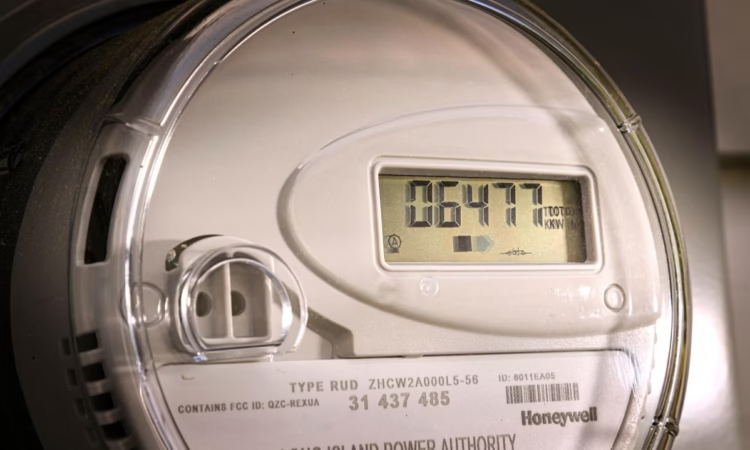
Long Island ratepayers are facing a second month in which electric and gas bills are likely to go up rather than down, as LIPA projected last year.
A prolonged cold snap is putting further pressure on the cost of natural gas, hiking charges for both National Grid gas customers and PSEG Long Island ratepayers, who pay for natural gas to fuel National Grid power plants contracted to LIPA through a power supply charge.
That charge for PSEG LI electric bills will increase another 13% this month from January, when they increased 3%, Newsday reported. LIPA during discussions over its board-approved budget late last year projected bills this year would be on average around $6 lower than last year, based on lower projected usage and a reduction in purchases from Long Island power plants.
Bills still can go lower, if natural gas and other costs decrease to a greater degree than expected later this year, but LIPA last year also under-projected power supply charges, to the tune of more than $200 million, Newsday has reported.
The February power supply charge of 14.69 cents a kilowatt hour is 22% higher than a year ago, according to figures from the utility. LIPA notes the charge fluctuates month to month based on commodity costs for fuel and power — and will likely go down once pressure from the cold snap is relieved.
It’s not just electricity that’s increasing. The cost of a therm of natural gas from Long Island’s primary supplier, National Grid, jumped to 96.23 cents this month from 72.14 cents last month, a 29% increase. National Grid’s February 2026 gas charge is 67% greater than the charge in February 2025, according to the company’s figures.
The 96.23 cents a therm for gas this month is the highest level reported by National Grid since prices spiked to just over $1 a therm in September 2022, according to company figures.
Both LIPA and National Grid also increased their delivery charges this year. National Grid’s is part of a three-year rate hike approved by the state Public Service Commission, while LIPA’s was approved by its board.
LIPA’s delivery rate is subject to a PSC review only when its revenue requirement exceeds 2.5% for a year, a figure it can avoid by tweaking one of several other bill adjustments — up or down — in any given year, including the delivery service adjustment. LIPA hasn’t had a full PSC rate review in a decade.
Home heating oil customers are seeing only slightly less volatile costs, according to figures from New York State. A gallon of home heating oil rose to $4.11 last week, a 5.4% jump from the week prior, and a slight a slight drop from the previous year’s $4.15. Fuel oil on Long Island has remained between $3.67 and $4.11, according to the state figures.
Fred Harrison, a Merrick ratepayer and activist at Food & Water Watch, in an email discussing the February hike said that from his perspective, LIPA’s 2026 projection for lower bills “have never been credible.”
Even when LIPA announced its 2026 projected rates, natural gas prices were “clearly rising and there was no evidence there would be either a warmer winter or a cooler summer,” he said. “Their projected rate saving was based on an underestimation of natural gas prices as well as a projected decline in electricity usage.”

Mark Harrington, a Newsday reporter since 1999, covers energy, wineries, Indian affairs and fisheries.


