Making the approximately half-hour drive from his Glendale home to his downtown Phoenix workplace meant Ben Saiz was filling up his Chevrolet Tahoe once a week — twice tops.
That task has nearly tripled since President Donald Trump’s surprise Feb. 28 military attack on Iran in coordination with Israel, Saiz told The Arizona Republic on the afternoon of March 12 while at the pump at a Quick Trip on West Indian School Road and Third Avenue.
“The jump in price is definitely outrageous right now, and it all has to do with Trump going to war,” Saiz, 34, said. “We are the ones actually paying for it.”
The average regular gas price in Phoenix proper on March 12 was 84 cents more than the day before the conflict in the Middle East broke out Feb. 27, according to figures listed by AAA.
This is what Phoenix-area motorists and experts had to say about how current events in the Middle East are impacting wallets in the Valley.
How much is gas in Phoenix?
Saiz was scoping out advertised gas station fuel prices on his commute March 12 and noticed one location that listed regular prices at $3.99 the day before had leapt to $4.50.
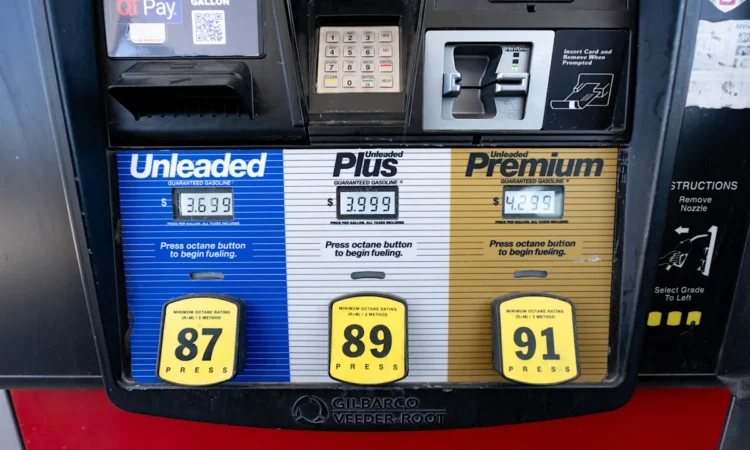
As of March 12, the average regular gas price in Phoenix proper was $4.33 per gallon, according to figures listed by AAA.
This is about 54 cents more than the average regular price a week prior, according to AAA. The difference between the average regular price March 12 is about 78 cents more than a year prior, AAA figures show.
Why are gas prices so high?
Brent crude, a global oil benchmark, reached a high of $101.8 a barrel March 12, according to MarketWatch data. The Feb. 27 high was $72.99 a barrel.
A protracted conflict will typically be adverse for gas prices, AAA spokesperson Julian Paredes explained to The Republic.
Fighting has played a detrimental role in accessing oil and natural gas as early March saw a near-total shutdown of the Strait of Hormuz. The waterway, situated between the Persian Gulf and the Gulf of Oman, carries 20% of oil shipments and about 20% of the world’s seaborne liquified natural gas.
“The cost of oil is the biggest way a conflict all the way in Iran can impact Arizona,” Paredes said. “Oil prices are global, and (oil is) the biggest ingredient for gas. So, if oil prices are high, gas prices will be higher for everyone.”
How has Trump’s planning impacted gas prices?
Petroleum analyst Patrick De Haan, also known as the Gas Buddy, told The Republic that Trump’s unclear strategy is burdening consumers in the U.S.
“There’s no cohesive plan and that puts the nation at risk,” De Haan said about Trump’s handling of the limited access to the Strait of Hormuz. “We broke the Strait of Hormuz because we did not use diplomatic efforts.”
What has Trump said about gas prices?
Trump told Reuters on March 5 that he did not “have any concern” on gas price increases.
The president on March 2 said he expected the conflict to last four to five weeks but could “go far longer than that.” Then on March 9, Trump told CBS News, “the war is very complete, pretty much.”
Drivers in Phoenix link gas prices to war
Visiting from Santa Clara, California, Victoria Smith, 42, acknowledged gas prices are always higher in warmer months. Still, she volunteered that what she was paying on gas for her sedan was a lot more because of military action overseas.
“The jump in price has to do with the war in the Middle East,” Smith said.
This is a trend Phoenix resident Emilio Beltran, 32, said he has observed through most of his life.
“It’s the same thing where we went to Iraq,” Beltran said of the United States’ occupation in March 2003. “All the gas prices went up.”
Republic reporters Rey Covarrubias Jr. and Perry Vandell contributed to this article.
This article originally appeared on Arizona Republic: Gas prices caused by Iran war? Phoenix motorists think so