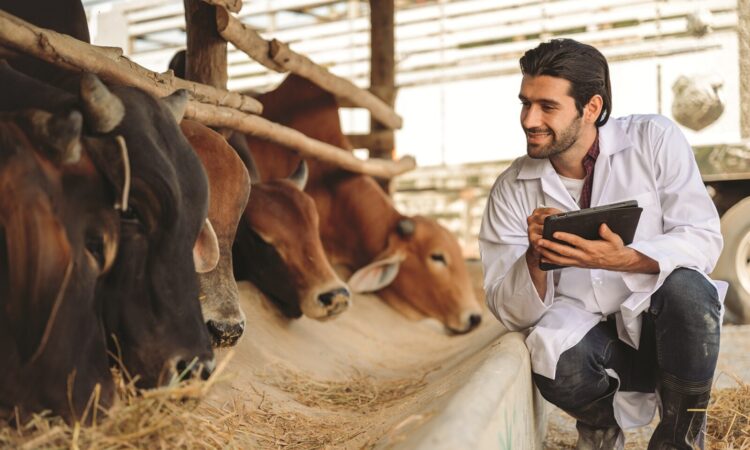
The image of farmers clad in flannel shirts while livestock pull plows through the fields may still be foremost on the minds of individuals asked to imagine farm life. But such images may no longer reflect an industry increasingly governed by advanced technology.
Even small-scale family farms have recognized the advantages of embracing technology to help make their operations more efficient and successful. Manual plows and tractors largely have been replaced by fleets of autonomous machines and precision farming technology.
Experts agree that the evolution of modern farming is a case study in the application of Science, Technology, Engineering, and Mathematics. STEM is helping to address the problem of global food security and widespread climate change. U.S. News & World Report says 27 percent of new high-skills jobs in agriculture will require a STEM education. There are many ways STEM is utilized within the agricultural sector.
Genomics and biotechnology: Scientists can now identify specific traits in plant DNA that will allow for more drought-resistant crops or those better equipped to tolerate problems like downy mildew. Other traits may make plants more capable of thriving in saline soils. Soil science also enables farmers to learn more about the complex microbiome of the soil, which ultimately can help to maximize nutrient uptake.
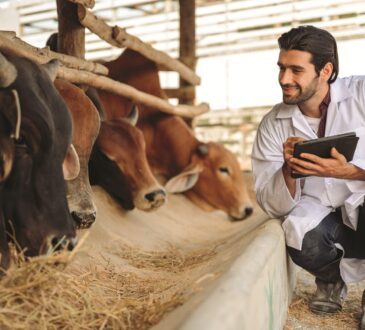
Precision agriculture: STEM is a force behind precision agriculture, which the United States Department of Agriculture says is a term to describe farming based on observing, measuring and responding to within-field variability through crop management. Precision farming utilizes remote sensing from satellites and drones, sensors embedded in the soil or devices worn by livestock to provide real-time data. AI tools also are used to predict harvest yields and optimize fertilization and irrigation.
Robotics: Automation and robotics fills a void created by human worker shortages. Agricultural engineers help design machinery or focus on the physical infrastructure of the farm. Engineers also are the minds behind innovative farming practices like vertical farming and controlled environment agriculture, which encompasses hydroponic and aeroponic systems.
Mathematical analysis: Math is vital in the agricultural sector. Statistics, predictive modeling, accounting, and risk management, are types of mathematical analysis employed to forecast global food supplies and profits.
The link between STEM and agriculture is undeniable. STEM is an important driver of the industry and only stands to gain influence in the years to come.