
Research-backed adoption of high-oleic soybeans is improving milk quality and lowering costs for Michigan dairy farms.
At first look, the 400 acres of soybeans on the Preston family’s dairy farm in southern Michigan appear no different from any other field. In reality, the crop reflects a research partnership with Michigan State University that is cutting the family’s livestock feed costs by tens of thousands of dollars each month and may have lasting effects on the dairy industry.
The soybean variety was developed through federally funded research at the College of Agriculture and Natural Resources at MSU and is designed to improve milk quality when included in dairy cow diets. In the spring of 2024, the fourth-generation team at Preston Farms decided to plant the soybeans on nearly one-third of their 1,500 acres.
Brian Preston, an MSU alum who manages the farm and its nearly 1,000 cattle, knew they were taking a chance. “Those 400 acres could have been our corn and our grain for the year,” he says.
Once the soybeans were harvested and added to the cows’ feed, the impact became clear. Within just three days, milk fat and protein levels rose, increasing the overall value of the milk produced.
“There was a lot of relief,” Preston says, “that it was all coming together and that it paid off.” And soon, that relief turned to excitement and optimism.
“The first thing we noticed when we started feeding the soybeans,” Preston says, “was that our purchased feed costs dropped by 20% per month, and that was huge. That’s a once-in-a-generation change.”
Big ideas, real-world solutions
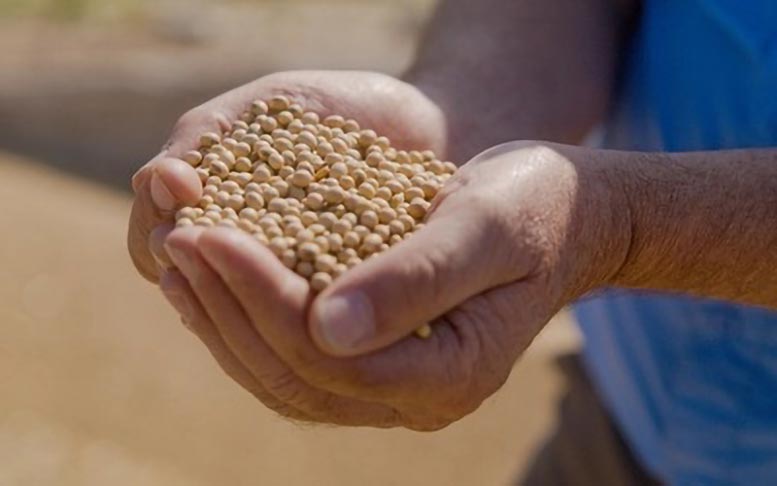
What appears to be a sudden breakthrough is the result of many years of research. Adam Lock, a professor in the MSU Department of Animal Science and interim chair of the Department of Large Animal Clinical Sciences, leads a research team that has spent more than a decade examining how dietary fats affect dairy cows. One line of this work has centered on high oleic soybeans, which are rich in oleic acid, a naturally occurring fatty acid found in both animal and plant-based fats and oils. Researchers hoped that adding these soybeans to cow diets would boost milk fat and protein production while also improving farm profitability.
“Our work builds on over a decade of research in our lab exploring how dietary fats influence milk composition, cow health, and farm economics,” Lock says. “High-oleic soybeans are a natural extension of our focus on practical, science-based feeding strategies.” Along with USDA National Institute of Food and Agriculture funding, Lock’s research is supported by the Michigan Alliance for Animal Agriculture, Michigan Milk Producers Association, and United Soybean Board. “Public funding drives innovation, industry partnerships, and real-world impact for our state’s agricultural sector,” he says.
Data collection and analysis confirmed the team’s hypothesis. Further studies by his team revealed that roasting the soybeans before feeding could provide even greater benefits for milk production.
Many dairy farmers purchase costly dietary ingredients such as fat and amino acid supplements to optimize cow nutrition. Preston says adding high-oleic soybeans to his farm’s nutrition plan and roasting them on-site could replace most of those supplements. Preston Farms, one of the early adopters of high-oleic soybeans, is not the only farm taking notice. Lock says Michigan seed suppliers ran out of the soybean seed last year due to demand.
This public investment in dairy research doesn’t just benefit the Prestons. It also builds trust among the agricultural community and strengthens Michigan’s agricultural economy and ensures that science is translated into action.
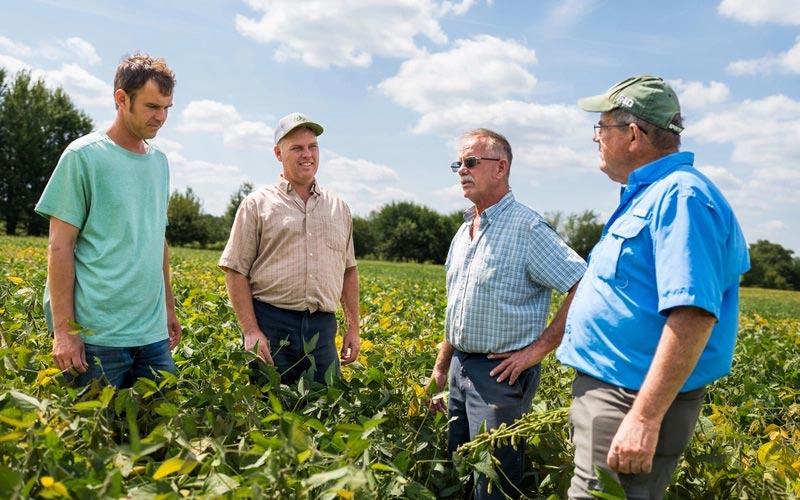
“Seeing our research in action at farms like Preston Farms is incredibly fulfilling,” Lock says. “It’s a reminder that the work we do at MSU doesn’t just live in journals, it lives in feed bunks, milk tanks, and the day-to-day decisions of Michigan farmers. That kind of impact is what drives us.”
And at a time when many universities are disinvesting in dairy research, the new Dairy Cattle Teaching and Research Center at MSU promises that more impactful producer-focused research like Lock’s will continue to thrive.
Better dairy for Michigan families
The relationship between the Prestons and MSU — just like the family farm — extends generations. Many members of the Preston family went to MSU, dating all the way back to the 1940s when Brian Preston’s grandfather Stanley completed an MSU agricultural short course. According to Preston, the family farm has been working directly with MSU and MSU Extension for more than three decades. And while the relationship has been beneficial to the family, the recent work with the soybean crop has been incomparable.
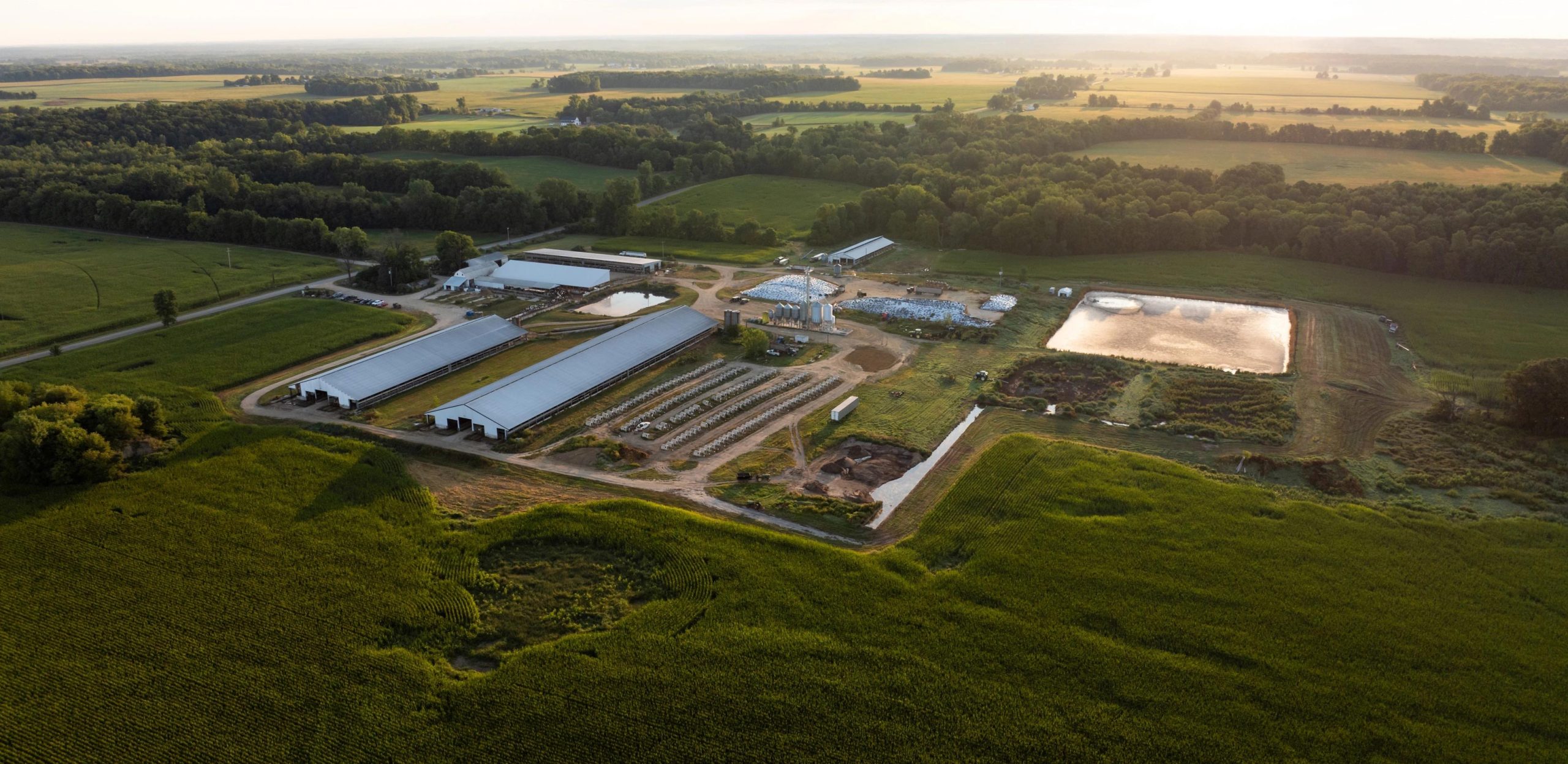
Preston says high-oleic soybeans “could change our entire industry.”
In a state like Michigan, which is home to more than 850 dairy farms and approximately 436,000 dairy cows, and where the dairy industry contributes $15.7 billion to the state’s economy, that is a big deal. It means Michigan residents have access to better quality dairy products, and dairy farmers across the state can optimize their resources and output. According to the United Dairy Industry of Michigan, fresh dairy products like milk, cheese and yogurt — which travel from farm to processor to store within about 48 hours — are made in the state. Higher-quality dairy products from places like Preston Farms is a bonus for all Michiganders.
And to Glenn Preston, Brian’s uncle and owner of Preston Farms, having MSU as a partner is a big deal. “Through MSU Extension and working with Adam Lock, we have access to the best and brightest minds in the world,” he says. “People at MSU are pushing the envelope to help our industry move forward — and they are helping us be more profitable. And what it comes down to in the end is that MSU helps our business, which means we’re able to be here for another generation.”
Never miss a breakthrough: Join the SciTechDaily newsletter.
Follow us on Google and Google News.


