Loss of crude oil exports and attacks on Middle East refineries have sent oil, gas, diesel, petrol and jet fuel prices sky-high
Undoubtedly the war in Iran has upended the way we view energy security and its impact is global, including on southeast Europe and the East Med. That was the subject of a roundtable conference organised by the Institute of Energy for Southeast Europe (IENE) at the European Parliament in Brussels this week.
The unthinkable has happened. Iran has closed the Strait of Hormuz with a massive impact on global oil and LNG supplies, but also a plethora of oil and gas products. In numbers, the disruption in global supplies is estimated to be: crude oil 20 per cent, LNG 20 per cent, ammonia/urea 35 per cent, sulphur 40 per cent, helium 25 per cent, methanol 25 per cent, jet fuel 15 per cent.
If closing the Strait of Hormuz was not bad enough, Israel chose to escalate the war even more by attacking Iran’s South Pars gas facilities, one of the largest gas fields in the world and the backbone of Iran’s domestic energy system. Even the UAE and Qatar condemned the attack. Iran retaliated by striking the Ras-Laffan LNG complex in Qatar, that produces 20 per cent of global LNG exports, putting it out of action for months. Qatar said that two liquefaction trains were damaged and could take three to five years to repair, affecting 17 per cent of its LNG production. As a result, the glut in LNG supplies the industry was expecting will now not happen, with LNG prices remaining high to 2030.
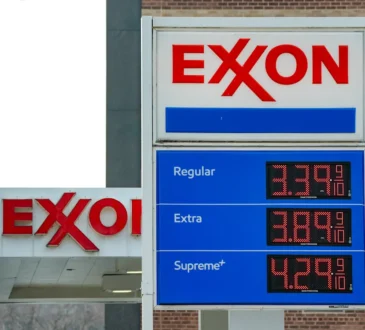
Loss of crude oil exports and attacks on Middle East refineries have also sent diesel, petrol and jet fuel prices sky-high, with a huge impact on the cost of transport and aviation. Jet fuel now sells at twice its pre-war price. Following the attack on Ras-Laffan, Brent jumped to $114/b and TTF gas to €68/MWh. But, after statements by US President Donald Trump, the markets appear to believe that attacks on oil and gas installations will not escalate further, with Brent dropping to $108/b and TTF gas to less than €61/MWh.
Energy prices will remain high as long as the Strait of Hormuz remains closed. The longer it takes to open the strait, the higher prices will go and for a longer period. And, of course, there is always a risk of escalation. If that happens, or the strait remains closed for over three months, a Brent price above $150/b is not unthinkable.
This is causing havoc for global supply chains and is impacting Asia’s and Europe’s petrochemicals and other industries, aviation, transport, as well as agriculture and food.
It also has economic and energy security impacts in southeast Europe and around the East Med.
Impact on East Med energy security
The war has affected southeast Europe and East Med countries disproportionately due to the high energy intensity of their GDPs and the regions’ high sensitivity to global energy price spikes and their role as maritime hubs.
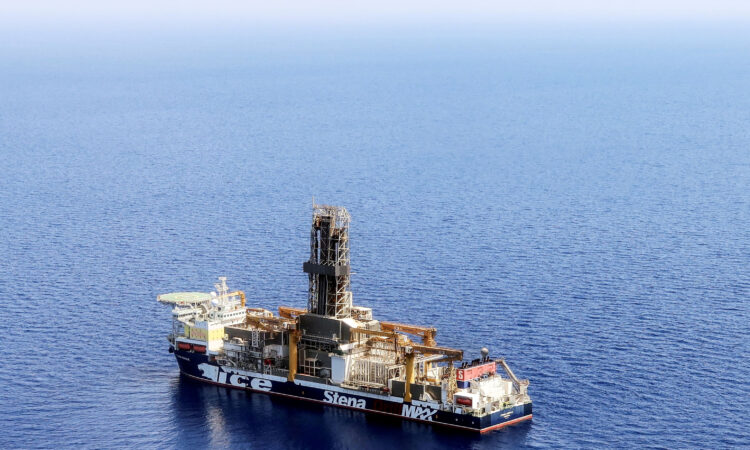
The conflict has reignited tensions in the East Med, specifically threatening hydrocarbon exploration near Cyprus and Greece, increasing friction between Greece and Turkey and expanding regional threats and tension due to proximity to the war zone.
A drone attack near UK’s Akrotiri base caused alarm in Cyprus. Greece and several EU nations deployed frigates and fighter jets to bolster Cyprus defence against drone and missile attacks. Reacting to this, Turkey deployed its own fighter jets and air defence systems to the occupied north of Cyprus, saying that it aimed at “consolidating the power balance” on the island, adding to regional tension.
Following escalating attacks from Iran, Israel shut down the Leviathan and Karish gas fields, and halted gas exports to Egypt and Jordan, impacting roughly 1.1 billion cubic feet per day of supply. It is severely straining regional energy networks, leading to increasing global gas prices as the countries affected scour the market to secure additional LNG to replace Israeli gas, at a time of LNG supply shortages.
As a result of Israel’s action, Egypt is facing critical gas shortages. The loss of Israeli gas amounts to about 20 per cent of its consumption, forcing it to increase LNG imports and fuel oil usage for power generation, at almost double pre-war prices. This has a huge impact on its beleaguered economy and finances. The country has already started curbing electricity use.
Jordan’s reliance on imported Israeli gas is fueling domestic dissatisfaction and political tension.
The shutdown has also caused significant disruption to Israel’s energy supply and has led to frequent blackouts.
These developments highlight the risks to Israel’s role as a reliable regional energy supplier, forcing reliance on alternative, more expensive, energy sources.
Fossil fuel dependence into question
Clearly a direct consequence of the Iran war is that heavy dependence on fossil fuels exposes users to disproportionate energy security and costs challenges. Every fuel-importing country will do what’s needed, including a return to coal, to reduce or even remove oil from its energy mix.
Inevitably and understandably, the crisis is accelerating discussions in the southeast Europe region regarding nuclear energy reinvestment and faster deployment of renewables, including rooftop solar, to reduce reliance on imported fossil fuels.
In this context, electricity interconnectors are the “nervous system” of energy security in Southeast Europe. They are critical because they transform isolated national grids into a resilient, collective network, providing a “safety net” during supply shocks, balancing “variable” renewables. They also lower the “conflict premium”. By linking markets, if one energy source becomes too expensive or gets cut off, interconnectors allow the market to find the next cheapest electricity supply available anywhere in the region. The exception to this is Cyprus that has an isolated electricity system, and runs the risk that it will remain so, endangering its future energy security.
Impact on Cyprus
Apart from physical security risks, Cyprus’ energy is disproportionately affected because of its high fossil fuel dependence. According to a Eurostat report released this month, Cyprus recorded an 88 per cent energy import-dependency rate in 2024, compared to an EU average of 57.2 per cent. This high figure leaves the country vulnerable to external market shocks, particularly to current geopolitical tensions in the Middle East. Cyprus is ranked among the EU’s most oil-product and energy import-dependent countries.
If Brent stays at today’s levels beyond the end of March, petrol and electricity prices could increase by about 25 per cent. If Brent climbs to $150/b, petrol could reach €2.15/litre and the electricity price could increase by 50 per cent compared to pre-war levels.
The Iran war will not affect availability of fuels Cyprus is importing, and as a result there will not be any shortages, but it is having a disproportionate impact on transport and electricity energy prices and of course the economy and the cost of living.
The war in Iran has brought energy security to the top of the agenda for Europe and the southeast Europe and East Med regions.