
The focus on industrial and digital agriculture now defines the Mozambican government’s new strategy to increase agricultural income, promote sustainable production, protect the environment and integrate small-scale producers into value chains, within the framework of modernising the agricultural sector and adopting new technologies.
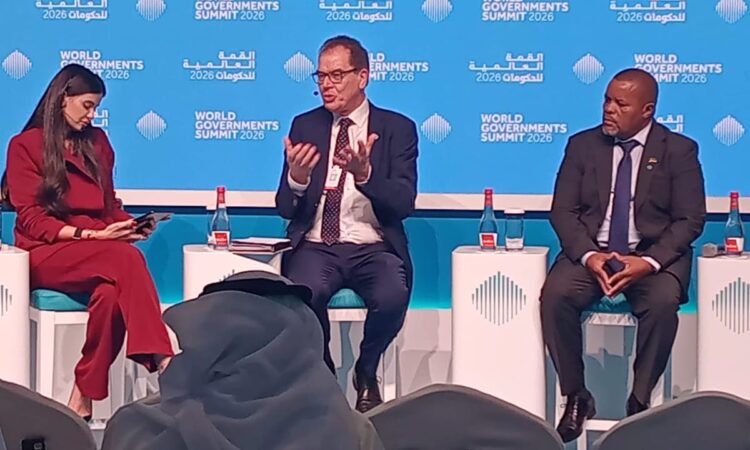
This direction was reaffirmed on Thursday (5 February) in Dubai by the Minister of Agriculture, Environment and Fisheries, Roberto Albino, on the sidelines of a session on the future of energy and industries.
According to Albino, the choice of a market-oriented agriculture, led by the private sector, does not mean excluding smallholder farmers, but rather their inclusion in a more efficient and inclusive economic model.
“We are saying that smallholder farmers, small-scale producers, must be integrated to increase their incomes and contribute to the overall growth of the country,” he stated.
The minister rejected the notion that industrialising agriculture poses a threat to the environment, arguing that its impact can be positive when well planned.
“Currently, to increase overall production, we rely on expanding land areas, which leads to deforestation because yields per hectare are low. Industrialisation allows us to produce more in a smaller space with less environmental impact,” he explained.
As an example, he highlighted the Mapai dam project in Gaza province, noting that the infrastructure will enable high levels of agricultural production concentrated in a reduced area.
“With 200,000 hectares of irrigable land, we can achieve the output that today requires about one million hectares with low productivity levels,” he emphasised, adding that the dam will also enable flood control, energy production and environmental protection in the Limpopo basin.
Regarding technological innovation, Albino emphasised the commitment to modern agricultural solutions, including conservation practices, rational use of inputs and technologies that do not rely on fossil products harmful to the environment.
“It is possible to industrialise agriculture in an environmentally friendly way. That is our approach,” he stressed.
On digitalisation, the minister pointed out that Mozambique cannot be left behind in global trends related to new technologies and artificial intelligence.
“The world is becoming digital and Mozambique must be digital,” he said, recalling the creation of the Ministry of Communications and Digital Transformation as a clear sign of government direction.
In the agricultural sector, he explained that digitalisation is essential for integrating small producers into value chains, accessing credit and enhancing process transparency.
“If we have digital platforms, we can identify who the producer is, where they are located and what they produce. This makes processes more accountable and gives confidence to financiers,” he said, adding that banks will thus be better able to understand the agricultural sector.
He also referred to the growing use of drones and other technologies in production processes, highlighting gains in efficiency, safety and appeal to young people.
“Young people learn quickly to use these technologies. Agriculture must be modern, attractive and income-generating,” he argued.
Addressing the impacts of recent floods in the southern and central regions of the country, Albino reiterated the need to invest in water infrastructure, once again highlighting the Mapai dam as a national priority.
“If the Mapai dam had been built, it would not have completely eliminated the floods but would have significantly reduced their impact,” he said.
He explained that the government is working in a coordinated manner across the agriculture, public works and energy sectors, focusing on an integrated project involving water, energy, food security and environmental security.
“The Limpopo is uncontrolled. All the rainwater from local and inland countries flows directly to the lowlands of Limpopo and Chókwè. For this reason, the Mapai dam constitutes a national priority,” he concluded.
It is important to note that the MAAP minister shared the session with Gerd Müller, Director-General of the United Nations Industrial Development Organization (UNIDO).
Source: AIM Moçambique


