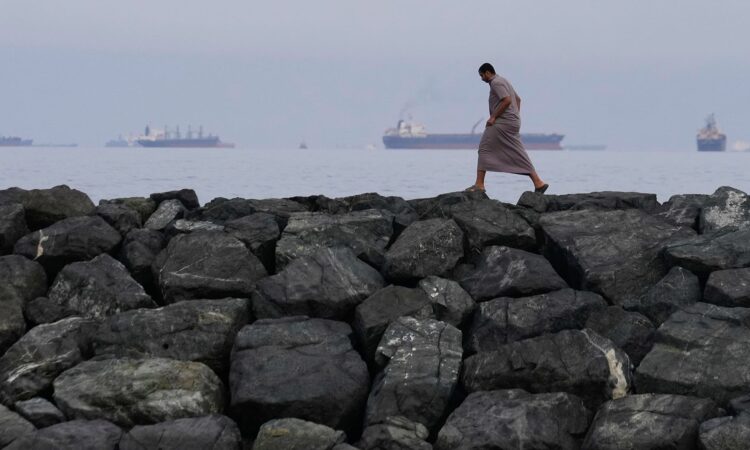
We are in the midst of what could be an unprecedented and escalating global energy crisis. Many are asking when it might end. On one hand, it could conceivably end any time President Donald Trump declares victory with respect to the core military objectives. On the other hand, Iran has a vote on when the conflict ends. As U.S. Secretary of War Pete Hegseth observed this morning, “the only thing prohibiting transit in the straits right now is Iran shooting at shipping.” The shooting does not appear poised to stop. The first public statement attributed to the new supreme leader of Iran, Ayatollah Mojtaba Khamenei, proclaimed on Thursday that “the lever of closing the Strait of Hormuz must continue to be used.”
The effective closure of the strait has the potential to remove some 20 million barrels per day (mmb/d) from global oil supply, or about 20 percent of global petroleum liquids consumption. To put that in perspective, the Arab Oil Embargo of the 1970s removed approximately 4 mmb/d from the global oil market, or just 7 percent of consumption at that time. To deal with this crisis, the member states of the International Energy Agency (IEA) agreed this week to release 400 mmb of oil reserves. Of that, the United States is slated to release 172 mmb of the 415 mmb it has in the U.S. Strategic Petroleum Reserve (SPR).
Dan Poneman, my colleague and CFR senior fellow, Jason Bordoff, founding director of the Center on Global Energy Policy at Columbia University’s School of International and Public Affairs, and I were intimately involved in one of the last releases of oil from the SPR in 2011 during the Libyan civil war. We got together to reminisce and to have a serious conversation about drawdown capacity, supply disruption mitigation, the weaponization of energy, and oil and gas prices and markets.
MICHAEL FROMAN: Dan and Jason, this marks only the fifth emergency drawdown in the history of the SPR, with previous drawdowns happening in 1991 (Gulf War), 2005 (Hurricane Katrina), 2011 (Libyan Civil War), and 2022 (Russia’s full-scale invasion of Ukraine). The three of us worked together under President Barack Obama in 2011 to address Libyan production going offline. I remember meeting together in the Oval Office, a number of times, to brief the president on his options and the complexities of tapping the SPR. That disruption and the scale of our response seem almost quaint today.
DAN PONEMAN: In 2011, we were worried about the stoppage of Libyan production, which was around 1.5 mmb/d. Now we’re worried about tanker transit in the Strait of Hormuz, through which 20 mmb/d of crude typically flows. Our 2011 SPR release of approximately 30 million barrels over thirty days was primarily designed to calm markets and stabilize prices. The disruption was manageable from a supply perspective. And it was just one tool in the toolbox. We also traveled throughout the Gulf to encourage core producers to bring online millions of barrels per day in spare capacity.
FROMAN: One thing I remember learning back then was that releasing oil from the reserve was a lot more complicated and a lot harder to do at scale than most people assumed. The SPR is stored in sixty underground salt caverns along the Gulf Coast, and the infrastructure for its release is quite limited.
JASON BORDOFF: That’s right. It doesn’t matter that this is the “biggest” ever release of global reserves. Throughput is what matters. According to the U.S. Department of Energy, the SPR is said to have a maximum drawdown capacity of 4.4 mmb/d, but that capacity only exists on paper. In reality, the capacity is much lower because we have failed to modernize the SPR infrastructure, as I testified years ago. In the 2022 release, the U.S. only supplied 1 mmb/d. Combined with our IEA partners, we may get a total of a few million barrels per day, but it will cover only a fraction of the oil being blocked by the closure of the Strait of Hormuz. Some Gulf oil is being rerouted via other means, and there is a limited amount of available spare capacity, but even that requires transit to get from the Gulf out into the global market.
PONEMAN: Indeed. While there are alternative pipelines like Saudi Arabia’s East-West Pipeline and the United Arab Emirates’ (UAE) Abu Dhabi Crude Oil Pipeline which will allow them to move some oil without going through the strait, they have limitations as well. The UAE’s pipeline might be able to move just under 1.8 mmb/d, and the Saudi one is effectively limited by the capacity of the Yanbu export terminal which is designed to top out at around 4.5 mmb/d, but which has a substantially lower capacity in practice. Plus, that export terminal, and the ships that it can load, will be potentially exposed to attacks from the Houthis if they mobilize.
FROMAN: Right. We can’t get enough oil out of the Gulf by any means. So we’re probably going to have a shortfall of over 10 mmb/d, once you factor in pipelines, reserve releases, and floating storage. The U.S. government has said it will insure ships through the U.S. International Development Finance Corporation, which could alleviate one obstacle to shipping, but the bigger question is whether those ships can actually sail safely through the narrow waterway. Energy Secretary Chris Wright told CNBC that the U.S. military is “not ready” to escort oil tankers yet, but that could change, depending on the nature of the Iranian threat.
Iran has ramped up its attacks on oil tankers and terminals near the Strait of Hormuz, and there are unverified reports that Iran might have begun to mine in the strait. The U.S. Navy recently decommissioned its four aging Avenger minesweepers that were in the Middle East—ships built with wooden hulls precisely to avoid triggering the magnetic mines they hunted—and partially replaced them with Littoral Combat Ships (LCS) now operating in the Persian Gulf. Instead of sending sailors into minefields on wooden boats, the crews of these LCS will send autonomous underwater and surface drones to hunt the mines while crews stay safely out of harm’s way. The current crisis could be an important trial run for this approach.
Even without mining the strait, Iran has sufficient drone and missile capabilities to strike tankers, which are slow moving and must follow precise routes. They also possess unmanned surface vehicles (USVs, or drone boats) capable of severely damaging vessels.
All of this seems to point to higher oil prices, doesn’t it?
BORDOFF: It’s kind of amazing that the Strait of Hormuz is mostly closed, reports are that Iran might be mining the strait, missiles are flying between Gulf countries, and we’ve seen high but not crazy oil prices. I think the only thing that is stopping oil from going to these higher levels is that the markets are betting Trump will declare the war to be over soon.
FROMAN: When people say no ships are still sailing through the Strait of Hormuz, that’s not entirely correct. There are some number of Iranian ships sailing through. In fact, the Wall Street Journal reported this week that Iran is exporting more oil now through the strait than it did before the war—and ironically at a higher price!
PONEMAN: Russia is benefitting from this price spike, too. The Financial Times reported that Russia is earning as much as $150 million per day in windfall profits thanks to increased oil prices and the narrowing price gap for Russian crude. On Thursday, Secretary Bessent also announced that the United States would grant a “temporary authorization to permit countries to purchase Russian oil currently stranded at sea.” That floating storage may be as large as 125 million barrels.
BORDOFF: A lot of people thought China would be damaged significantly by this conflict, and they certainly will be paying a lot more for the large amount of oil and gas they import, but as I wrote recently in Foreign Policy, this situation can be seen as a validation of China’s long-term energy security strategy, which has focused on trying to curb oil imports by electrifying more of their economy; producing more of that electricity from domestic sources, such as coal and renewables; and building a massive strategic petroleum reserve of around 1.4 billion barrels.
PONEMAN: Jason is absolutely correct that this crisis highlights the economic and security risks of energy dependence. Remember that the big push on nuclear energy—not only in the United States, but also in places like France, Japan, Korea, and Sweden—came after the Arab Oil Embargo of 1973. Progress on nuclear energy stalled after the accidents at Three Mile Island, Chernobyl, and Fukushima. But the oil embargo was the big catalyst that helps explain why over four hundred nuclear reactors are operating around the world today. Now growing energy security concerns come on top of surging electricity demand globally, driven by the AI revolution as well as economic growth in the Global South. These factors have combined with climate concerns to lead nearly forty countries to pledge to triple their nuclear capacity by 2050. This crisis might accelerate that buildout still further.
Even so, nuclear and renewables aren’t like-for-like substitutes for oil. Despite the $10–12 trillion invested in renewables over the past ten years, we are likely to remain heavily dependent on oil for a long time.
FROMAN: Let’s end back where we started, with the issue of the SPR. Interestingly, there is a lot of interest in stockpiling these days. It turns out we have a long history of stockpiling everything from medical and public health supplies to cheese and raisins. Now, we’re talking about strengthening our National Defense Stockpile with Project Vault, focused on storing up critical minerals, and potentially building a National Economic Stockpile. Oftentimes, the SPR is explicitly cited as a model. Let’s hope we learn the lessons from the strengths and limitations of the SPR as a policy tool as they become evident in dealing with the energy crisis at hand.
Let me know what you think about the oil crisis and what this column should cover next by replying to [email protected].