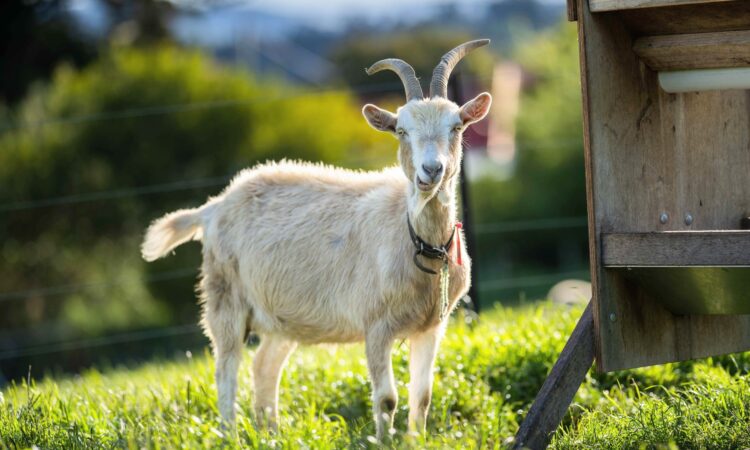
For a long time, scientists believed that grasslands across the world were under threat mainly because of too many grazing animals.
Cattle, sheep, goats, and buffalo were seen as the main cause of damaged land and disappearing plants.

While this problem still exists in many places, new research from Arizona State University shows a very different picture in large parts of the world.
In many regions, livestock numbers are not increasing at all. Instead, numbers are falling. Researchers call this trend destocking.
This global shift matters because grazing animals shape landscapes, affect plants and wildlife, and influence climate and water systems.
Understanding where livestock numbers rise or fall helps land managers make better decisions for the future.
What destocking means for land
The new study shows that destocking is not simply the opposite of overgrazing. Reducing livestock does not always fix land problems on its own.
In some cases, fewer animals can create new challenges that need careful management.
“We often assume that rangelands are being degraded because we overgraze them, but the data show that it’s not the whole story: nearly half of livestock production occurs in areas that have experienced destocking over the past 25 years,” said Professor Osvaldo Sala.
The research team noted that land without grazing animals can change quickly. Plants may grow unchecked, which can raise wildfire risk.
Some plant species may spread fast and crowd out others. In certain ecosystems, biodiversity may increase. In others, biodiversity may decline. These outcomes depend on local conditions.
“We need to manage both processes,” Sala said. “It’s not that destocking is automatically positive and that we should just leave it alone.”
Where livestock numbers rise or fall
The researchers studied global livestock data from 1999 to 2023 from the United Nations Food and Agriculture Organization. The analysis focused on cattle, buffalo, sheep, and goats across the world.
The results reveal strong regional differences. Areas that once held 42 percent of the world’s grazing animals saw livestock numbers drop by about 12 percent over 25 years.
Destocking appears most often in Europe, North America, Australia, and parts of Africa and Asia. Eastern Europe shows the sharpest change, with a 37 percent decline.
Other regions show the opposite pattern. Middle Africa, Central Asia, and South America experienced rapid growth in livestock numbers. Overall livestock populations in these regions rose by about 40 percent since 1999.
These contrasting trends show that global grazing patterns no longer follow a single story of growth or decline.
What drives these changes
To understand the reasons behind these trends, Sala worked with José Anadón, a researcher at the Instituto Pirenaico de Ecología. The team examined social, economic, and environmental factors.
International trade patterns did not explain the changes. Rising global temperatures also failed to match the locations of destocking and increased stocking.
“Climate change exists, but it doesn’t explain these particular spatial patterns of destocking and increasing stocking rates,” Sala said.
Economic conditions played a major role. Wealthier regions rely more on industrial and feed based farming.
Advanced technology allows higher meat production per animal. Meat output per animal stands about 72 percent higher in rich regions compared to poorer ones.
In less wealthy regions, grazing based systems remain common. These systems often support daily survival rather than high efficiency.
Human population growth also shapes demand. Areas with fast population growth show higher demand for meat, which pushes livestock numbers upward.
Destocking affects the planet
Livestock grazing covers nearly one quarter of the planet’s land surface. No other human activity uses more land. Because of this scale, changes in grazing patterns affect ecosystems worldwide.
Destocking can increase wildfire risk when tall grasses build up without grazing. Reduced grazing may also allow a few strong plant species to dominate and remove weaker species.
At the same time, more plant growth can help ecosystems capture carbon dioxide from the air, which benefits the global climate.
“This is not just doom and gloom – it’s a more realistic, complex picture that suggests both risks and opportunities,” Sala said.
Grazing also affects water systems. Less plant cover can increase water runoff into streams. However, reduced grazing does not always lead to more water downstream.
“Stopping grazing doesn’t always mean more water to downstream users; effects are location-specific and need to be studied,” Sala said.
Paths for land management
Some landscapes may benefit from rewilding or from introducing different grazers such as bison or goats.
These animals may replace certain roles once filled by cattle. Strong scientific evidence remains essential before choosing solutions.
Sala and Anadón emphasize that focusing only on overgrazing has limited progress. Destocking offers new chances to improve conservation, increase carbon storage, and protect rural livelihoods.
“These are important issues for land managers, policymakers, and the public,” Sala said. “We need better data, more experiments, and thoughtful policies that recognize regional differences.”
The study is published in the journal Proceedings of the National Academy of Sciences.
—–
Like what you read? Subscribe to our newsletter for engaging articles, exclusive content, and the latest updates.
Check us out on EarthSnap, a free app brought to you by Eric Ralls and Earth.com.
—–