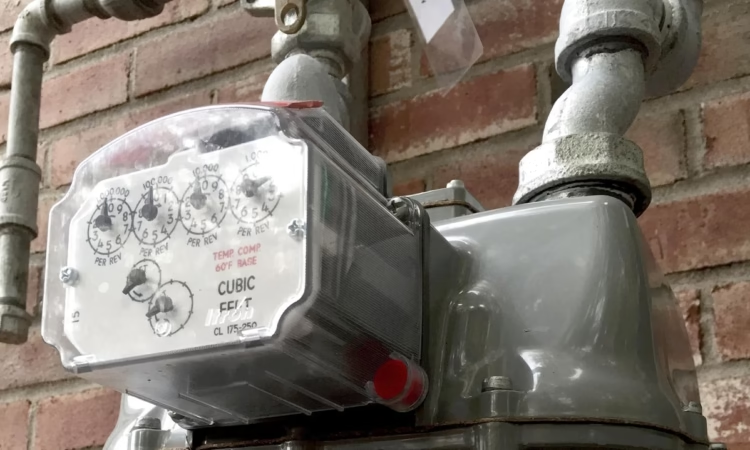
National Grid has broken multiple records for gas delivery in the region to meet increased usage during this year’s deep freeze, including an all-time record for a single-day gas usage on Feb. 1, the company told Newsday Wednesday.
The milestone comes just months after another National Grid asset, the Northport power station, also set a record for its highest production day ever, during the June 2025 heat wave. Both come at a time of reckoning for the state and the country as green-energy advocates push for a carbon-free grid amid Trump administration opposition to wind and solar energy in support of a fossil-fuel-weighted agenda.
National Grid’s newest single-day record for natural gas delivery set on Sunday saw a total of 1,176,448 dekatherms delivered to more than 600,000 customers on Long Island and the Rockaways, topping the previous record set in the January 2019 cold spell by more than 60,720 dekatherms. The Feb. 1 figure is also about 200,000 more dekatherms than a typical winter day. Typical homes use 10 to 15 dekatherms a day during cold spells.
It comes as New York State has begun to ease previously aggressive targets to reduce natural gas for heating and powering electric plants and has approved an enhanced natural gas pipeline into the region..
WHAT NEWSDAY FOUND
- National Grid has broken multiple records for gas delivery in the region to meet increased usage during this year’s deep freeze, the company told Newsday Wednesday.
- National Grid’s newest single-day record for natural gas delivery set on Sunday saw a total of 1,176,448 dekatherms delivered to more than 600,000 customers on Long Island and the Rockaways, topping the previous record set in the January 2019 cold spell by more than 60,720 dekatherms.
- The records come as New York State has begun to ease previously aggressive targets to reduce natural gas for heating and powering electric plants and has approved an enhanced natural gas pipeline into the region.
In all, National Grid set four regional records for all-time usage between Jan. 23 and Feb. 1, and hit six of the top 10 all-time highs since January, according to company figures.
“It’s just an incredible amount of gas that we’ve flown through the system,” said Ross Turrini, chief operating officer for gas at National Grid New York. The records were hit without glitches or the need to deploy a network of compressed natural gas tanker trucks to injection points throughout the system, he said.
It’s not just gas usage that’s soaring. Customers are also seeing a spike in natural gas prices, Newsday reported, with the price jumping 29% in February to 96.23 cents a dekatherm, compared with just over 72 cents in January. February marked the highest price for gas since September 2022, Newsday reported, and represents a 67% jump from the 57.56 cents paid a year ago. National Grid doesn’t profit from supply
The combination of higher prices and spiking usage are sure to set customer bills rising through the winter, amid indications the cold snap will continue with lows expected this weekend.
Previous issues during cold spells, including winter storm Elliot in late December, 2022, were centered chiefly in supply lines upstream from Nation Grid’s regional operations, Turrini said. Those problems did not crop up this year, and National Grid’s system was prepared and operated “flawlessly.” The company staffed up on the coldest, snowiest days.
Preparations for the cold snap included storing enough liquefied natural gas in spring and fall, when supplies are greater and prices lower, to feed the system through the winter. National Grid has two LNG production facilities in the region, in Holtsville and Greenpoint (Brooklyn), where gas is purified, supercooled, condensed by 600 times its normal volume and stored for high-demand winter usage.
“We’ve used quite a bit of LNG during the cold snap,” Turrini said, though supplies remain on target for the remainder of the winter.
The adequate supply through even a period of record use doesn’t diminish the need for new supply lines, Turrini said.
National Grid has been advocating for a recently state-approved plan to increase supply into the region through a project called Northeast Supply Enhancement, which would increase downstate natural gas availability by 13%.
“NESE enables us to meet the forecast growth that’s going to happen in the New York City and Long Island [regions], it’s going to allow for economic development and supply the economy of the region,” he said.
Opponents of the natural gas expansion project say the lack of supply problems on the highest use days raise questions about the need for NESE. “I definitely know they don’t need this,” said Kim Fraczek, director of the Sane Energy Project, which opposes NESE and supports an all-renewable grid.
She faults Gov. Kathy Hochul for allowing the project to be reconsidered and for paving the way for fossil-fuel plant upgrades. “She’s basically undone everything we’ve achieved in the last 15 years.”
Hochul has said she supports an “all of the above” energy strategy that includes repowering some plants and keeping natural gas flowing in line with market realities, including federal opposition to renewables.
Turrini said NESE also would allow National Grid to keep regional power plants supplied with uninterrupted natural gas at lower temperatures than at present. The plants, he said, used “a lot of gas” during the recent cold snap, and while there are cold-weather restrictions in place, they didn’t result in interruptions this past month.
While National Grid customers would see a 3.5% bill hike tied to the cost to build NESE, the company expects that having the pipeline extension in place will help stabilize prices and offset winter peaks.

Mark Harrington, a Newsday reporter since 1999, covers energy, wineries, Indian affairs and fisheries.