A natural gas pipeline exploded along the coastline in Cameron Parish on Tuesday, sending flames and smoke high into the air, but no major injuries were reported.
The cause of the explosion near the Calcasieu Ship Channel and the Texas border was not yet clear, said Ashley Buller, assistant director of the parish’s emergency preparedness department. The explosion occurred around noon and was brought under control shortly afterward, she said. State Police were investigating.
It blew up where the pipeline meets the shore between Holly Beach and Johnson Bayou, said Buller. The 28-mile line belongs to Delfin LNG, which is developing an offshore liquefied natural gas facility nearby. The plant is not yet in operation and preliminary actions were being performed on the line, she said.
The company shut off the line and the remaining gas was burning off. One worker involved in the operation may have sustained minor injuries and was being taken to a hospital in nearby Port Arthur, Texas, as a precautionary measure.
Students at a school in Johnson Bayou were kept inside during recess as a precaution.
“Everything is under control at this point, and there was not a threat to anything else nearby,” Buller said on Tuesday afternoon.
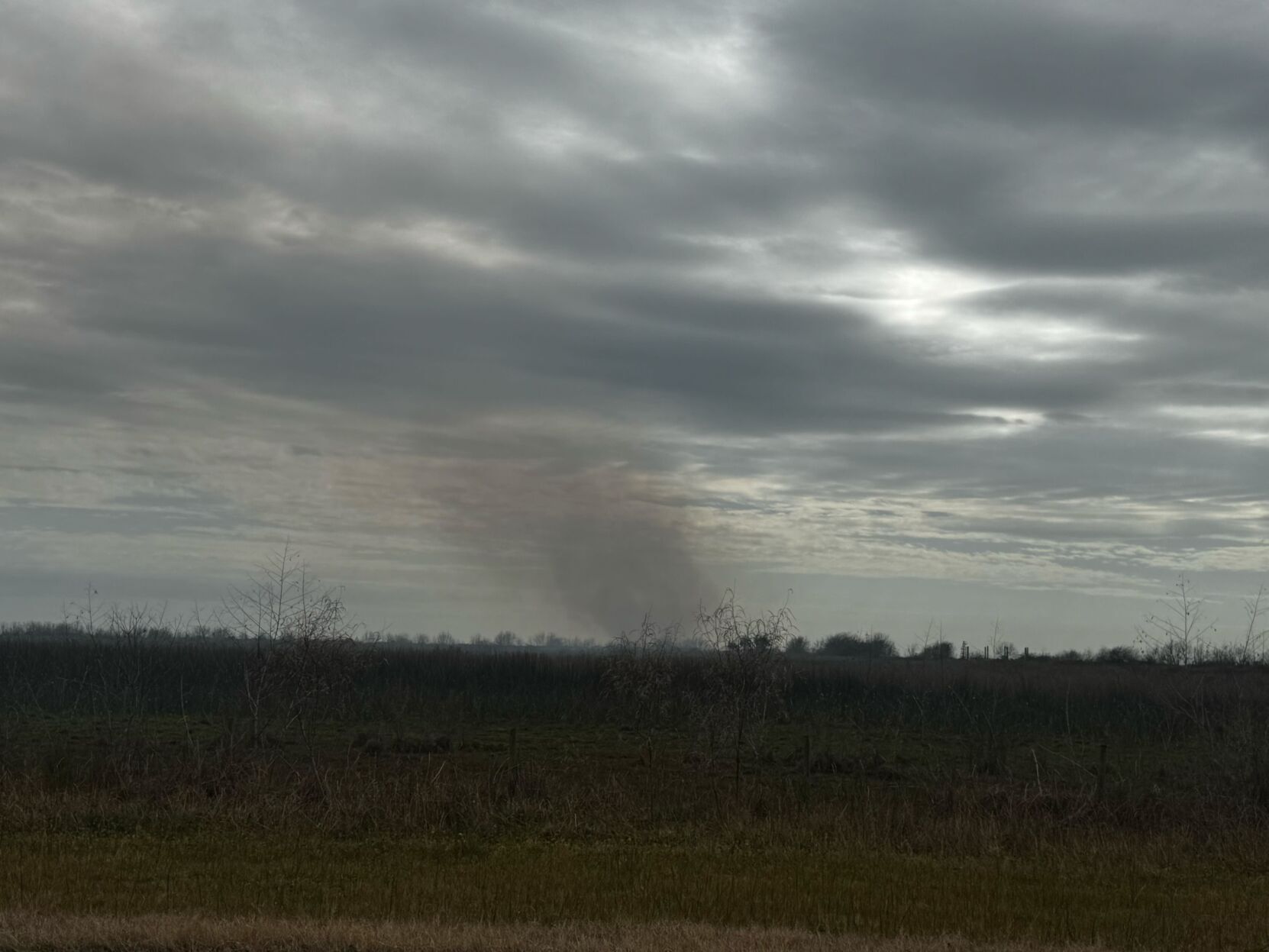
Smoke can be seen rising in the area where a pipeline exploded off Cameron Parish.
The Cameron Parish Sheriff’s Office, emergency preparedness officials and the Johnson Bayou Fire Department were all on the scene. Smoke that had previously filled the sky in the area was fading by mid-afternoon.
Delfin could not immediately be reached for comment.
Cameron Parish has become an epicenter of LNG production, including Cheniere Energy’s Sabine Pass terminal, the country’s largest. The process involves converting natural gas to liquid form by supercooling it, allowing it to be exported around the world.
Commercial fishermen and environmental groups have raised concerns over the large facilities, including the possibility of accidents. The state has embraced the industry as an important source of jobs and revenue, while the country has promoted LNG exports as part of its foreign policy.
Delfin, with offices in Norway and Pensacola, Florida, has been developing its export terminal around 40 nautical miles off Louisiana’s coast. It is to include three vessels capable of producing 4 million tons of LNG, connected to existing offshore pipelines transporting natural gas, it says on its website.
The company says it purchased the UTOS pipeline in 2014, calling it the largest natural gas pipeline in the Gulf. It was not immediately clear if that pipeline was the same one involved in Tuesday’s explosion.
Robyn Thigpen, executive director of the advocacy group Fishermen Involved in Saving Our Heritage, or FISH, said she received reports from three fishermen who heard the explosion from more than 11 miles away.
Thigpen was especially concerned because the only full-service hospital in the area has not reopened since 2020’s Hurricane Laura, which devastated southwest Louisiana.
“It’s really important that people understand they never reopened a hospital,” she said.
Cameron Parish has been steadily losing population since 2005’s Hurricane Rita, which left much of the region in ruins. A 2024 estimate put the population at some 4,700, compared to around 10,000 at the turn of the century.
Traditionally tied to commercial and recreational fishing, as well as the offshore oil industry, the parish has in recent years positioned itself as a strategically located LNG hub. Besides Cheniere, two other export terminals are also located in Cameron and more are planned.
Environmental activists expressed concern over the explosion and warned over the rapid development of the LNG industry.
As he stood in Johnson Bayou watching the smoke billow from the explosion, James Hiatt, director of the For a Better Bayou advocacy group, argued that communities were being asked to carry the risks of LNG production without realizing much of the benefit.
“We are the largest exporter of natural gas in the world, and to look around this place, you would not know the wealth,” Hiatt said. “Because they don’t only export the gas, they export the profits too.”
Staff Writers Mike Smith and Josie Abugov contributed to this report.