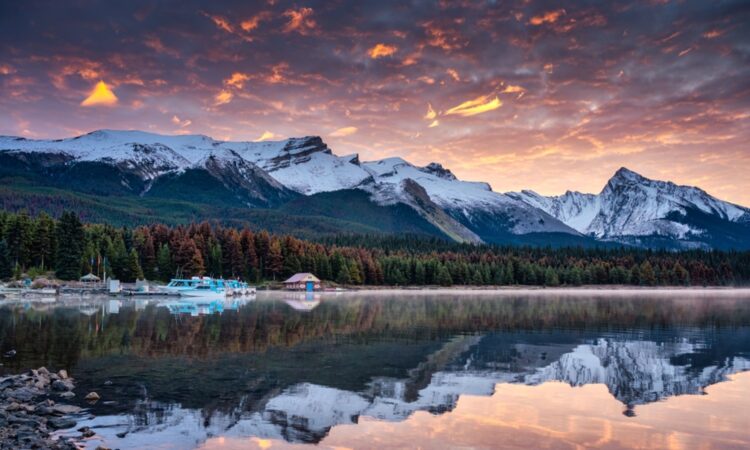
The pristine white snowpack blanketing the Rocky Mountains may look pure, but a new study reveals it carries an invisible burden. Industrial pollutants from distant mining operations are hitching rides on winter storms and depositing toxic metals across nearly 50 mountain sites from Montana to New Mexico.
According to an article on Earth.com, the Rocky Mountain snow contains toxic metals from faraway mining, raising questions about long-distance atmospheric pollution and its effects on the water supply for 60 million people.
Atmospheric highways deliver distant pollution
When winter storms sweep across the Pacific Northwest, they pick up more than moisture. Research led by Monica Arienzo from the Desert Research Institute has revealed that these weather systems also transport metal contaminants from active and abandoned mining sites, depositing them hundreds of miles away in mountain snowpack.
The study, published in Environmental Pollution, examined mercury, zinc, cadmium, and antimony concentrations at sites throughout the Rockies. By tracking storm trajectories backward through time, researchers pinpointed the pollution’s origins in the Pacific Northwest, Idaho, and Montana. These are regions with extensive past and present mining operations.
A decade of data reveals consistent patterns
The research team collected snow samples during spring 2018 across 48 locations. But they didn’t stop there. To confirm their findings weren’t a one-time anomaly, they analyzed long-term precipitation data from the National Atmospheric Deposition Program spanning 2009 through 2018.
“I was surprised by the amount of agreement we saw between all these different data sets we brought together,” Arienzo said. The decade-long mercury and calcium measurements showed consistently higher contamination in the northern Rockies, across Montana, Idaho, and Northern Wyoming.
The agreement between multiple independent datasets strengthened confidence in the findings. When both fresh snow samples and archived precipitation records tell the same story, it signals a persistent environmental pattern rather than a temporary spike.
The dust connection accelerates snowmelt
While metal concentrations remain within EPA safety guidelines for drinking water and aquatic life, toxicity isn’t the only concern. Dust particles from mining regions reduce snow’s reflectivity. Reflectivity is a property scientists call “albedo.” Darker snow absorbs more sunlight and melts faster than pristine white snow.
This accelerated melting disrupts the carefully balanced timing of water availability in the American West. Snowpack serves as a natural reservoir, storing winter precipitation and releasing it gradually through spring and summer when agricultural demand peaks and river flows typically decline.
Earlier snowmelt means water arrives when it’s less needed and runs short when demand is highest. The Desert Research Institute study adds a new dimension to ongoing concerns about declining snowpack across the western United States.
Beyond snow: Tree rings as pollution archives
The contaminated snowpack research represents one component of a larger initiative funded by the National Science Foundation. Arienzo’s team is simultaneously examining tree rings as natural archives of mercury pollution over time.
Trees absorb mercury from both soil and the atmosphere as they grow, incorporating it into their annual growth rings. By comparing mercury levels in tree rings with those found in snowpack, scientists can construct a more complete timeline of how atmospheric pollution has changed over decades or even centuries.
This dual approach – combining modern snow sampling with historical tree ring analysis – provides both snapshot and time-lapse perspectives on environmental contamination. The tree-ring component may reveal whether current pollution levels reflect an increase, a decrease, or the continuation of historical patterns.
Mapping the source: Mining’s long reach
The research team overlaid winter storm trajectories with U.S. Geological Survey datasets tracking mining and smelting locations. The correlation was striking. Active mines and EPA Superfund sites – locations requiring environmental cleanup due to historical contamination – sat directly in the path of storms that deposited the highest levels of metals.
“Our idea is that the dust from current and historical mining sites gets carried up into the mountains and deposited across our study sites,” Arienzo explained. Mining activities produce extensive waste that can become airborne, and even closed mines continue to generate dust from exposed tailings and disturbed landscapes.
The Rockies are not the only place where mining pollutants travel through the atmosphere. Similar patterns occur globally wherever industrial operations coincide with prevailing wind patterns and atmospheric circulation systems.
Water security implications
More than 60 million people across the American West depend on Rocky Mountain runoff for drinking water, agriculture, and hydroelectric power. While current contamination levels don’t violate safety standards, the research demonstrates how industrial activities in one region can affect water quality in another.
The Colorado River Basin, which receives substantial flow from Rocky Mountain snowmelt, has already lost enough water to fill Lake Mead due to climate-driven changes. Adding concerns about metal contamination compounds the challenges facing water managers.
The study emphasizes the importance of continued scientific monitoring and mitigation efforts at both active and abandoned mining sites. Understanding these long-range pollution pathways helps prioritize cleanup efforts and guides policy decisions about future mining permits.
Collaborators from the U.S. Geological Survey, University of Nevada, Reno, and Portland State University contributed to the research, which represents one of the first comprehensive examinations of metal contamination across the entire Rocky Mountain range.
The study is published in the journal Environmental Pollution.
—–
Like what you read? Subscribe to our newsletter for engaging articles, exclusive content, and the latest updates.
Check us out on EarthSnap, a free app brought to you by Eric Ralls and Earth.com.
—–