
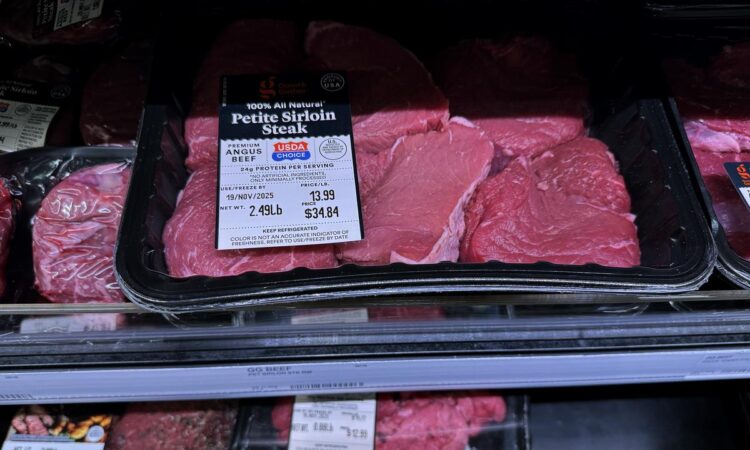
Beef prices continue to climb nationwide, and shoppers in Wyoming are noticing it at the grocery store and the cattle auction alike. According to the U.S. Bureau of Labor Statistics, meat inflation remains far above overall consumer inflation: beef and veal prices jumped about 16.4% over the past year as of December 2025, even though total inflation rose only 2.7% for all goods and services over that same period.
Across the country, ground beef and steaks are among the most inflation‑hit items, with steak prices climbing nearly 18% year‑over‑year in late 2025. That trend is reflected in what Wyoming families are paying at grocery stores, where meat staples like hamburger are noticeably more expensive than in recent years.
One direct factor behind these rising prices is a tight cattle supply. Ranchers nationwide have been reducing herd sizes amid persistent drought and high production costs, leaving fewer cattle available for processing. Data from cattle market analysts show that fed cattle inventories and slaughter numbers are expected to decline in 2025 compared with recent years, potentially reducing beef production and tightening supplies further.
Wyoming’s livestock markets illustrate this dynamic locally. Ranchers at sale barns such as Buffalo Livestock Market in Campbell County report record‑high cattle prices this year, with beef cattle selling at levels roughly 40% above last year’s rates according to local auctioneers. Average values for feeder and replacement cattle in the state’s weekly USDA auction reports also show strong demand and active bidding, even as the region deals with ongoing drought conditions.
Local agricultural economists note that drought across portions of Wyoming and the broader High Plains has stressed forage supplies and contributed to higher hay and feed costs. This makes it more expensive to raise cattle and slows herd rebuilding, even as record cattle prices offer a rare opportunity for producers’ bottom lines.
For consumers, the result is higher prices on everyday beef items—from burger packs to steak cuts—compared with recent years. Retail beef inflation in the U.S. outpaces the broader food category by a wide margin, making beef one of the key drivers of grocery price pressure even as other segments of the economy experience more moderate inflation.
Because it can take at least two years to raise cattle from calves to finished animals, any improvement in supply that could lower prices won’t happen quickly. Until herd numbers grow and drought conditions improve, Wyoming ranchers and beef consumers alike may continue to see elevated cattle and beef prices in markets and at the checkout.
🍞🥛 10 Things I Found at the Milkhouse in Mills
Sure, the markets are closed for the season, but The Milkhouse in Mills is still our weekend happy place. The smell of fresh bread hits you first, then the honey, the cheese, the eggs — all local, all made by neighbors. It’s the kind of spot that makes you remember why “fresh” really matters.
Gallery Credit: Kolby Fedore, Townsquare Media
The Northern Lights Glowed Above Casper
Nov. 11, 2025. Readers shared their photos from a magical night.


