India’s agricultural economy is often described as data-rich and reform-heavy.
While India has invested in agricultural support systems for several decades through expanded irrigation networks, price support mechanisms and periodic risk-mitigation measures, the impact was often uneven and episodic. Over the past decade or so, however, the policy approach has shifted decisively towards building system-wide resilience. Emphasis on digital advisory platforms has improved the reach and timeliness of farm-level information, while sustained investments in irrigation and wider crop insurance coverage have strengthened farmers’ ability to manage climatic and market shocks.
Access to finance has also deepened. Institutional agricultural credit has nearly tripled to ₹25.48 lakh crore, with 70 per cent of farm households now relying on formal sources such as banks and cooperatives. Crop insurance under the Pradhan Mantri Fasal Bima Yojana (PMFBY) has scaled to 56.8 crore farmer applications over eight years, with enrollments growing 27 per cent in FY24 and coverage extending across more than 50 crops.
Yet the success of agriculture in India transition cannot be measured by programmes alone. It ultimately depends on how effectively quality information reaches farmers, at the right time, in the right language and in a form that enables immediate decisions.
Despite sustained investments, farm productivity and incomes remain volatile, particularly for smallholders and women cultivators. Nearly 86 per cent of Indian farmers operate on small and marginal holdings of less than 2 hectares, a structure that limits economies of scale and reduces the ability to absorb weather, pests and price shocks. Evidence from other contexts suggests that well-designed digital advisory services can reduce the likelihood of severe crop loss by 24–26 per cent by providing localised, timely and action-oriented guidance during periods of stress.
However, access alone does not guarantee impact. Barriers such as low literacy, uneven smartphone ownership, patchy connectivity and limited digital confidence continue to restrict the ability of many farmers to convert information into action. These constraints are particularly visible among women farmers, who make a large share of day-to-day farming decisions but remain underserved by conventional advisory systems.
From information to decisions
What Indian agriculture now requires is decision-ready advisory. Farmers often need guidance when choices are being made — be it be based on sowing, irrigation, pest control or harvesting and in formats they trust. Evidence supports this shift. A study of the iSAT (ICT-linked advisory platform) in Karnataka found that farmers placed the highest value on the timeliness and relevance of messages, with adoption rates rising sharply when advisories were delivered in local languages and aligned to real-time farm conditions rather than generic recommendations. This transition will define the next phase of agricultural transformation.
Technology alone rarely shifts farm behaviour. For smallholders facing climatic and market uncertainty, decisions depend on trust, local relevance and credible intermediaries. Recognising this, several States are recalibrating agricultural extension systems to blend digital advisory tools with physical outreach. In one such case, an extensive network of local extension centres is being integrated with e-governance and AI-enabled platforms. The aim is to deliver timely advisories on cropping, irrigation, pest management and markets directly to farmers’ mobile phones. This hybrid model reflects a wider policy shift towards strengthening last-mile delivery by aligning technology with institutional trust.
Such digital-plus-human systems mark a decisive shift in extension. Trained frontline workers translate satellite, soil and weather data into localised actions that farmers are willing to trust and adopt.
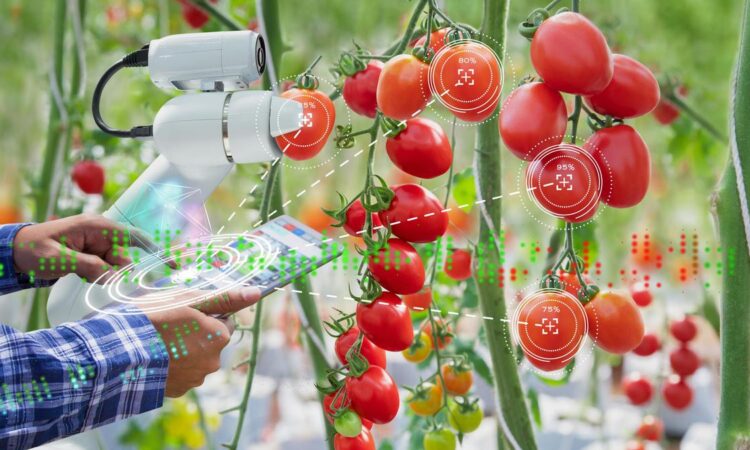
AI-enabled tools are reinforcing this transition. Platforms such as FarmerChat, an AI-powered application, function as virtual agronomists by delivering crop- and context-specific guidance directly to farmers. The platform enables hyperlocal, timely and actionable advisory, tailored to individual conditions and delivered in multiple local languages and formats, including voice and text—making it accessible even for low-literacy users.
As a digitally delivered, AI-driven system, it is highly cost-effective, significantly reducing the per-farmer cost of extension compared to traditional models. This makes the approach more responsive and inclusive, but also easier and quicker to scale across geographies.
Putting women at the centre
Any discussion on advisory reform must place women farmers at its core. According to the Periodic Labour Force Survey 2024, [2] 76.9 per cent of rural women are engaged in agriculture. When rural and urban participation is combined, women account for around 64.4 per cent of India’s agricultural workforce. Yet access gaps persist. Women are 14 per cent less likely than men to own a mobile phone and significantly less likely to use mobile internet in rural areas, limiting their exposure to digital advisory. Evidence from gender-responsive ICT programmes in eastern India shows that when women farmers directly engage with tailored digital extension, adoption of improved practices increases three to four times compared to reliance on conventional extension alone. These gains are linked to lower post-harvest losses and more consistent uptake of sustainable practices.
Women facilitators further strengthen impact. As community agents, they build trust faster. Digital adoption improves. The benefits extend beyond individual farms to household nutrition, incomes and broader rural resilience.
Advisory as economic infrastructure
All in all, hybrid (human + digital) advisory systems align closely with India’s Digital Agriculture Mission. A unified national framework connecting interoperable advisory platforms, open datasets and outcome-linked incentives can ensure that insights flow seamlessly from research and policy to farmers’ fields.
The prospects of agriculture in the country will increasingly be shaped by how effectively knowledge reaches those who grow its food. Timely, accurate and context-specific advisory has moved beyond being a support service to becoming core economic infrastructure. When information flows reliably from research to the field, it strengthens productivity, builds resilience against risk and creates the foundation for a more competitive, sustainable and prosperous farm economy in the decades ahead.
(The author is CEO, Digital Green India)
Published on January 24, 2026