
One year after customer outcry from skyrocketing natural gas bills fueled calls for temporary rate cuts, there’s been little action on Beacon Hill to find a permanent solution to bring down heating costs. Instead, the bitter reality this month is that gas customers across Massachusetts are opening some of the biggest bills they’ve ever seen, thanks to a bitterly cold December.Temperatures in December are running about 4.5 degrees below average, combined with gas rates that are as high or higher than last year, leading to some eye-popping bills once again.It’s renewed demands for state lawmakers to do something, but so far, there’s been little movement on an energy bill this session. A bill from Gov. Maura Healey, which she says will bring down costs, has been sitting in committee since last May, while a proposal in the House of Representatives that would have taken some drastic action on rolling back the state’s climate goals seems to have quietly died.In the meantime, state regulators approved a double-digit increase in delivery rates at Eversource’s gas divisions this fall. National Grid’s delivery charges fell slightly this winter, but that relief was largely canceled out by the rising cost of natural gas, which is more expensive at both companies than a year ago. These changes come after several years of double-digit gas rate hikes, approved by state regulators at the Department of Public Utilities.Several state programs are partly to blame for the rising bills, the biggest of which is Mass Save. The energy efficiency program costs $4.5 billion over three years and can add $80 to a $500 monthly gas bill. After last year’s customer outrage, the DPU trimmed the proposed Mass Save plan by 10% and ordered gas companies to more clearly break out the Mass Save charge on bills. It can now be found under an “energy efficiency” line item. On National Grid gas bills, this line is found under delivery charges. On Eversource gas bills, it’s under a new section called “Public Benefits,” which also includes charges for the state’s low-income energy assistance program.But the overall biggest driver pushing bills up is the cost to rebuild the state’s natural gas system, despite a plan to largely phase out gas to residential homes by 2050. On a recent Eversource bill, nearly half the cost goes to “Maintenance and Infrastructure,” which does include the company’s 9-10% profit margin. The state has allowed spending on new gas pipes to grow year over year.Among those costs, the Gas System Enhancement Plan — or GSEP — is a state program to encourage gas companies to replace the most leak-prone pipes on an accelerated timetable. To speed up this work, gas companies are allowed to recover the money they spend on their rates right away. Spending on GSEP hit $901 million in 2025, up 300% in 10 years. Forecast spending is down slightly in 2026 due to pressure at DPU to trim costs.The rising gas pipe expenditures come at the same time that gas customers are also footing the bill for expensive Mass Save subsidies to encourage people to switch to electric heat, meaning gas customers are paying to rebuild a gas system the state intends to eventually abandon.”We don’t want to ask people to pay for both,” said State Sen. Michael Barrett, Chair of the Committee on Utilities and Energy. “Every time you put in a new gas pipe, it’s 40 years’ addition to your monthly gas bill. It takes that long. It’s like paying off a 40-year mortgage.”Asking gas customers to pay for both a rebuild of the gas system and subsidizing a switch to electric heat has been official state policy since at least 2022. Barrett says lawmakers will take action on energy this session, but it’s not clear when.One thing is clear: it will likely come too late to make any difference in this winter’s bills.
One year after customer outcry from skyrocketing natural gas bills fueled calls for temporary rate cuts, there’s been little action on Beacon Hill to find a permanent solution to bring down heating costs.
Instead, the bitter reality this month is that gas customers across Massachusetts are opening some of the biggest bills they’ve ever seen, thanks to a bitterly cold December.
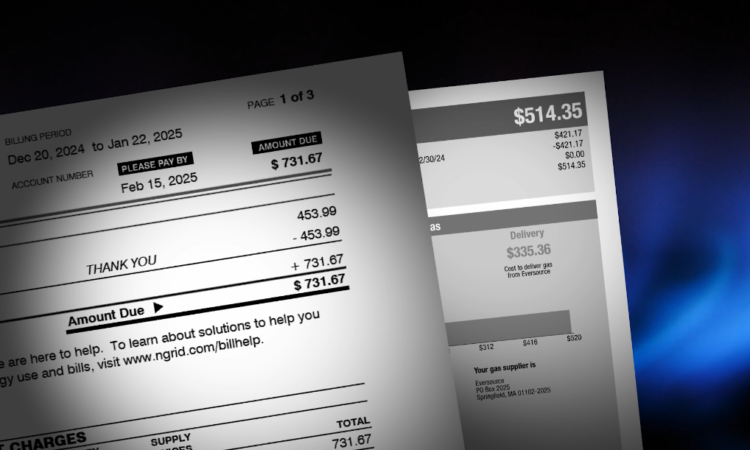
Temperatures in December are running about 4.5 degrees below average, combined with gas rates that are as high or higher than last year, leading to some eye-popping bills once again.
It’s renewed demands for state lawmakers to do something, but so far, there’s been little movement on an energy bill this session.
A bill from Gov. Maura Healey, which she says will bring down costs, has been sitting in committee since last May, while a proposal in the House of Representatives that would have taken some drastic action on rolling back the state’s climate goals seems to have quietly died.
In the meantime, state regulators approved a double-digit increase in delivery rates at Eversource’s gas divisions this fall.
National Grid’s delivery charges fell slightly this winter, but that relief was largely canceled out by the rising cost of natural gas, which is more expensive at both companies than a year ago.
These changes come after several years of double-digit gas rate hikes, approved by state regulators at the Department of Public Utilities.
Several state programs are partly to blame for the rising bills, the biggest of which is Mass Save. The energy efficiency program costs $4.5 billion over three years and can add $80 to a $500 monthly gas bill.
After last year’s customer outrage, the DPU trimmed the proposed Mass Save plan by 10% and ordered gas companies to more clearly break out the Mass Save charge on bills. It can now be found under an “energy efficiency” line item.
On National Grid gas bills, this line is found under delivery charges. On Eversource gas bills, it’s under a new section called “Public Benefits,” which also includes charges for the state’s low-income energy assistance program.
But the overall biggest driver pushing bills up is the cost to rebuild the state’s natural gas system, despite a plan to largely phase out gas to residential homes by 2050.
On a recent Eversource bill, nearly half the cost goes to “Maintenance and Infrastructure,” which does include the company’s 9-10% profit margin. The state has allowed spending on new gas pipes to grow year over year.
Among those costs, the Gas System Enhancement Plan — or GSEP — is a state program to encourage gas companies to replace the most leak-prone pipes on an accelerated timetable.
To speed up this work, gas companies are allowed to recover the money they spend on their rates right away. Spending on GSEP hit $901 million in 2025, up 300% in 10 years. Forecast spending is down slightly in 2026 due to pressure at DPU to trim costs.
The rising gas pipe expenditures come at the same time that gas customers are also footing the bill for expensive Mass Save subsidies to encourage people to switch to electric heat, meaning gas customers are paying to rebuild a gas system the state intends to eventually abandon.
“We don’t want to ask people to pay for both,” said State Sen. Michael Barrett, Chair of the Committee on Utilities and Energy. “Every time you put in a new gas pipe, it’s 40 years’ addition to your monthly gas bill. It takes that long. It’s like paying off a 40-year mortgage.”
Asking gas customers to pay for both a rebuild of the gas system and subsidizing a switch to electric heat has been official state policy since at least 2022. Barrett says lawmakers will take action on energy this session, but it’s not clear when.
One thing is clear: it will likely come too late to make any difference in this winter’s bills.


