The government’s decision on Sunday to relax the mandatory three-year waiting period to recognise and support deep-tech start-ups under its schemes is a sign of understanding that deep-tech ventures operate on fundamentally different timelines from consumer tech start-ups, stakeholders said.
The Department of Scientific & Industrial Research (DSIR) has relaxed the mandatory three-year existence condition for start-ups to be recognised under its Industrial Research and Development Promotion Programme (IRDPP). Deep tech investors and entrepreneurs told businessline that with this move, the Centre has signalled its readiness to back deep R&D, and this can help transform early research into viable businesses.
Capital-intensive
Deep-tech companies are capital-intensive, research-heavy, and often pre-revenue for a longer time period than start-ups in other sectors. While government funding in the form of grants or loans have been extended in the past, entrepreneurs say the three-year eligibility condition created a problem.
“Deep-tech innovation does not follow a linear or calendar-driven path. This move will significantly accelerate lab-to-market journeys, help founders validate breakthrough technologies earlier, and crowd in private capital with greater confidence. It is a timely, pragmatic reform that strengthens India’s ambition to build globally competitive deep-tech companies from day zero,” Vishesh Rajaram, Co-Founder and Managing Partner, Speciale Invest, said. It is also an early access to non-dilutive capital and strengthens founder credibility, he added.
Announcing the relaxation, Union Minister Dr Jitendra Singh described the move as an incentive to accelerate and sustain new deep-tech start-ups, while continuing to maintain appropriate evaluation standards linked to technological maturity.
DSIR’s IRDPP offers, among other benefits, eligible start-ups up to ₹1 crore grant support, some fiscal & tax-related incentives, and duty-free import of specified R&D equipment, instruments and the like. Many other government R&D funding schemes (from DST, DBT, CSIR, TDB, BIRAC, and so on.) require or prefer DSIR recognition to qualify. As per government data, around 865 start-ups have been recognised under IRDPP till date. The data on amount of financial incentives granted could not be ascertained.
Natarajan Malupillai – Group CEO, IITM Research Park, Incubation Cell, Rural Technology Business Incubator, said that many start-ups at IIT Madras Research Park benefit from support mechanisms like the DSIR recognition, targeted R&D grants, government-backed loans, procurement pilots like iDEX, BIRAC, MeitY programmes and public-sector pilot opportunities. “Early DSIR recognition can materially reduce upfront capex for hardware-intensive start-ups, exemption from customs duty for eligible R&D imports, and reduced iGST rates. This will accelerate prototyping and pilot deployments,” he said.
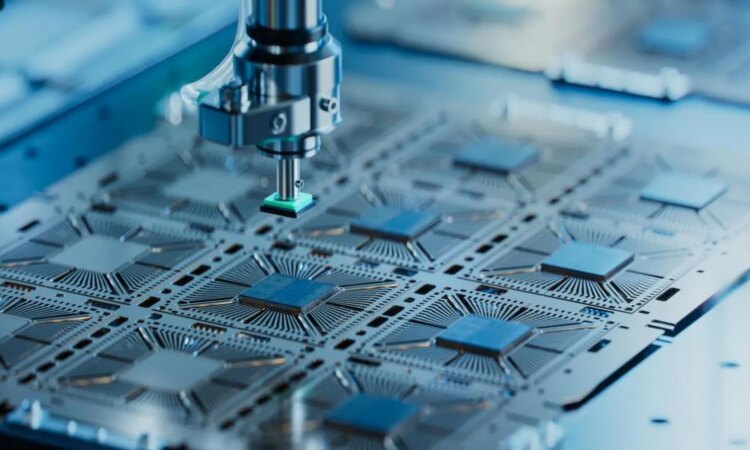
As an entrepreneur in the field of chip design, Shashwath TR, co-founder and CEO, Mindgrove Technologies, is particularly excited about the removal of the 3-year norm. “Chip design ventures alone face a 3-5 year journey from architecture conception to production-ready silicon. Deep tech start-ups need substantial upfront investment for prototyping, simulation tools, and IP licencing before generating revenue,” he said.
Quality talent
Amit Chand, Founder & Managing Partner, BYT Capital goes as far to say that it can even help retain quality talent in India. “With loan support available upfront, founders can design proper compensation for top PhDs and engineers instead of relying on goodwill and sweat equity. That’s a direct, policy-led push to keep deep-tech talent building in India instead of defaulting to Big Tech or foreign universities, he said.
Moin SPM, Co-founder & COO of Agnikul Cosmos hopes this push is taken further to establish shared testing and production infrastructure to reduce redundant capital expenditure for start-ups in similar sectors. Policymakers should also look at creating milestone-based funding mechanisms tied to technical achievements, and streamlining regulatory approvals for technology demonstrations, he adds.
Published on January 7, 2026