Dear Reader,
The Panorama newsletter is sent to Moneycontrol Pro subscribers on market days. It offers easy access to stories published on Moneycontrol Pro and gives a little extra by setting out a context or an event or trend that investors should keep track of.
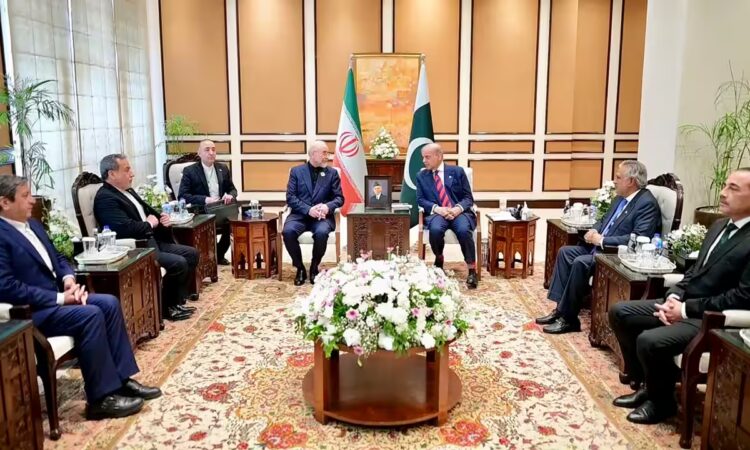
Global markets reacted swiftly and sharply after the Islamabad peace talks ended without an agreement.
Oil led the charge, as expected. WTI crude jumped 8.54 percent to $104.82 per barrel, and Brent gained 7.27 percent to $102.51. WTI had tumbled more than 16 percent on the ceasefire announcement, its biggest single-day drop since April 2020. The trigger for the rise, besides the failed talks, was President Trump’s announcement of a naval blockade of Iranian ports, aimed at choking off Iran’s ability to export oil or levy tolls on vessels transiting the Strait of Hormuz.
Equity markets fell in tandem at the opening bell, with Indian indices among the sharpest declines in Asia, as investors priced in the prospect of a prolonged conflict and the inflationary consequences of sustained high energy prices.
Yet the picture has evolved after the opening bell. Oil prices, after their initial surge, have begun to pull back. Asian equity markets, having absorbed the initial shock, are recovering from their lows. No fresh geopolitical developments have emerged since Trump’s blockade announcement, and markets appear to be quietly pricing in one of two scenarios — either a second round of diplomatic talks, or a faster-than-expected resolution to the conflict. It is far too early to draw firm conclusions, and the situation remains fragile, but the fact that markets have not continued to deteriorate is itself a signal worth watching.
The key market to track through all of this is crude oil, and analysts are warning that the morning’s moves may significantly understate the real risk. Jorge Montepeque, Group Managing Director at Onyx Capital, was blunt on Bloomberg Television when he said “The number we saw this morning — $103, an 8 percent increase — is not reflective at all of what could happen if the US really decides to go with this interdiction. It really makes no sense. It should be $140, $150.”
Beyond the price moves, the physical supply crunch poses the more serious and more enduring threat. The International Energy Agency has described the situation as “the greatest global energy security challenge in history.”
While the impact in India has been somewhat contained after the initial panic that caused runs on fuel stations and LPG distribution centres, elsewhere in Asia, the crisis is already very real.
The Philippines was the first country in the world to declare a state of national energy emergency, with President Bongbong Marcos invoking emergency powers as the country, which imports 98 percent of its oil from the Middle East, confronted the full severity of the supply cutoff. Thailand has seen diesel prices rise by nearly 70 percent, prompting the government to draw up a three-stage fuel rationing contingency plan that includes official guidance to raise household air-conditioning temperatures. In Bangladesh, the fuel shortage has tipped into public disorder, with daily reports of raids on petrol stations and fuel trucks. Pakistan, facing its own acute constraints, has asked cricket fans to stay home and watch matches on television to conserve fuel.
The Gulf states, ironically, face a different dimension of the crisis despite sitting atop some of the world’s largest hydrocarbon reserves. Because the Gulf Cooperation Council nations rely on the Strait of Hormuz not just for energy exports but for over 80 percent of their food imports, the blockade has created what is being described as a grocery supply emergency.
By mid-March, 70 percent of the region’s food imports had been disrupted, forcing retailers such as Lulu Retail to airlift basic staples and pushing consumer prices up by 40 percent to 120 percent. The situation risks tipping into a full humanitarian crisis as Iranian strikes have also targeted desalination plants, which provide 99 percent of drinking water in Kuwait and Qatar.
Europe enters this phase of the crisis in a structurally weak position. The continent began 2026 with gas storage levels well below the recent norm — 46 billion cubic metres at the end of February, compared to 60 bcm in 2025 and 77 bcm in 2024 — meaning the critical summer refill season now looks extremely difficult to navigate.
The European Central Bank has warned that a prolonged conflict is likely to push Germany and Italy into technical recession by the end of the year and trigger a period of stagflation across the broader eurozone. In a sign of how rapidly the political temperature is rising, finance ministers from Germany, Spain, Italy, Portugal, and Austria have already written jointly to the European Commission, calling for a bloc-wide windfall tax on energy companies and accusing them of exploiting “market distortions” caused by the price surge.
The overall tone of markets this Monday, after the initial fall, is one of cautious hope rather than outright panic. But the underlying arithmetic is unforgiving. If the Strait of Hormuz remains effectively closed, oil and gas prices will grind higher, feeding through into the costs of fertilisers, food, plastics, and industrial inputs across the global economy. The world is not yet at that point, but it is staring directly at the possibility.
Investing insights from our research team
Does a squeeze in sulphuric acid supply create opportunities?
Can growth momentum return for Escorts Kubota?
JSW Energy powers ahead with strong earnings visibility, renewables aid growth
What else are we reading?
Moneycontrol Pro Market Outlook | Geopolitics and earnings to steer market
Middle-East conflict: The world is on the brink
Hormuz and the new hierarchy of economic power
Chart of the Day: SIP investors stand firm amid market turmoil
Subsidy hike to bring limited relief for fertiliser sector
The Eastern Window: The strategic implications of Taiwan’s opposition party chief’s meeting with Xi
Will India’s climate conflict prove to be costly?
Weight-loss drugs and Mars bars: Novo Nordisk’s comeback bid (republished from the FT)
Illegality compounded with US’ announcement of Hormuz blockade
Donald J Trump gets a lesson in statecraft 101
US-Iran talks outcome holds the key for oil, metals, and markets next week
Data centre growth risks creating heat and water stress
The Ceasefire Mirage: Price knows what headlines don’t, Bhav Bhagwan Chhe
US’ shifting AI chip export rules are a chokepoint, hurting allies more than China
A decade on UPI’s made India a payment leader. Here’s what we need now
Markets
After a four month fall and 15% down, is the Nifty 50 finally due a rebound?
Tech and Startups
Government plans petabyte-scale cyber analytics backbone to tackle ‘state-sponsored threats’
Technical Picks: ASTRAZEN, FORTIS, WAAREEENER, RADICO, BEL
Shishir Asthana
Moneycontrol Pro