May Nymex natural gas (NGK26) on Wednesday closed up +0.011 (+0.42%).
Nat-gas prices posted modest gains on Wednesday, as the selloff over the past month has led to oversold conditions that prompted some technical short-covering.
On Tuesday, nat-gas prices sank to a 17-month low due to above-normal spring temperatures that have reduced US nat-gas heating demand and expanded storage levels. The Commodity Weather Group said that above-average temperatures are expected across the eastern two-thirds of the US through April 19 and the Upper Midwest from April 20-24.
Expectations of above-average US nat-gas storage levels signal abundant supplies and are bearish for prices. The consensus is that Thursday’s weekly EIA nat-gas inventories rose by +55 bcf in the week ended April 10, above the five-year average for the week of +38 bcf.
Projections for higher US nat-gas production are negative for prices. Last Tuesday, the EIA raised its forecast for 2026 US dry nat-gas production to 109.59 bcf/day from a March estimate of 109.49 bcf/day. US nat-gas production is currently near a record high, with active US nat-gas rigs posting a 2.5-year high in late February.
US (lower-48) dry gas production on Wednesday was 109.6 bcf/day (+2.0% y/y), according to BNEF. Lower-48 state gas demand on Wednesday was 68.5 bcf/day (-6.0% y/y), according to BNEF. Estimated LNG net flows to US LNG export terminals on Wednesday were 19.8 bcf/day (-1.3% w/w), according to BNEF.
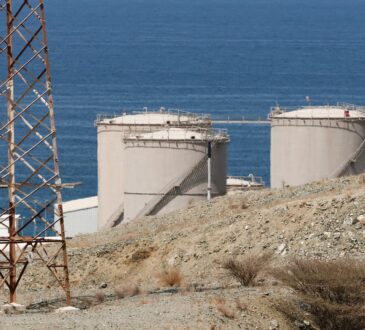
Nat-gas prices have some medium-term support on the outlook for tighter global LNG supplies. On March 19, Qatar reported “extensive damage” at the world’s largest natural gas export plant at Ras Laffan Industrial City. Qatar said the attacks by Iran damaged 17% of Ras Laffan’s LNG export capacity, a damage that will take three to five years to repair. The Ras Laffan plant accounts for about 20% of global liquefied natural gas supply, and a reduction in its capacity could boost US nat-gas exports. Also, the closure of the Strait of Hormuz due to the war in Iran has sharply curtailed nat-gas supplies to Europe and Asia.
As a negative factor for gas prices, the Edison Electric Institute reported Wednesday that US (lower-48) electricity output in the week ended April 11 fell -1.0% y/y to 72,672 GWh (gigawatt hours). However, US electricity output in the 52 weeks ending April 11 rose +1.76% y/y to 4,322,473 GWh.